
Blog Archives

15 ERAS Tips to Boost your Residency Candidacy

Over the years, I’ve cultivated several tips for crafting the best ERAS Experience Section. I’ve included 15 important ones below:

1. Include relevant pre-professional accomplishments from college. If you conducted research, for example, list and describe it. Do not include high school achievements unless they were truly unique (worked at the White House, sang on Broadway, published in Nature ;)).

2. As of 2023, you have only 10 slots, so avoid minor activities (like an afternoon health fair). 

3. Write in a streamlined fashion. Avoid verbiage. Of note, you can choose three most meaningful activities, but you only have 300 characters for each. So while you want to explain why the activity was impactful, you’ll need to keep your writing here especially tight.

4. Use full sentences. It’s a formal application, and you want to make your written materials as readable as possible.

5. Avoid most abbreviations. Ones you think are common might not be familiar to the reader.

6. Avoid contractions; they are too informal for an ERAS (but okay for this blog entry ;)). 

7. Make sure you spell out your accomplishments clearly. If your reader doesn’t understand an activity, you won’t get “full credit” for what you’ve done. Make no assumptions – not even that the reader has reviewed the experience’s introductory information (position title, location). 

8. Write about yourself and your role – not an organization. For example, don’t use the space to discuss Physicians without Borders. Use it to discuss the specifics of your role at Physicians without Borders.

9. Use numbers to be persuasive. Saying that the conference you organized had 500 participants says a lot.

10. Unless your PI won the Nobel, avoid using supervisors’ and/or doctors’ names in your descriptors as they will be meaningless to the majority of your readers.

11. Do your best not to leave the “Medical School Awards” section blank. Even if you have to simply include clerkships in which you obtained honors (or high honors), fill that section out.

12. If you have not already, consider joining your specialty’s national organization and listing it under the “Membership in Honorary/Professional Societies” section. If you are applying in two fields, take this advice, though. 

13. Try to end your entries with a sentence about how the experience you just described will help you as a future specialist. Making that connection for the reader furthers your candidacy. 

14. As with all good writing, avoid redundant language. Having the word “research” three times in two lines is distracting and demonstrates a lack of originality. 

15. Get help. Don’t submit your residency application without having it reviewed by someone with a lot of experience. (I started Insider Medical Admissions in 2007.) You do not want to put forward suboptimal materials for a process that is this important and competitive.

(Please note that there are a few changes to this year’s ERAS, including the use of Thalamus for interview scheduling. For more information, see this AAMC page.)
Tags: , , ,

Residency Applicant Characteristics: Key Differences Between Those who are Ranked Highly and Those who Aren’t

The NRMP posted a webinar on applicant characteristics associated with success and failure in the recent Match, specifically focusing on Family Medicine, OB/GYN, Otolaryngology, Pathology, and Diagnostic Radiology.

The webinar presents data tracking trends in whom programs (from those five specialties) ranked. NRMP says they hope to help applicants and residency directors gain a clearer understanding of the factors influencing candidate selection. Some of the data is to be expected (average Step 2 scores are higher for Otolaryngology than for Family Medicine), but there there are more specifics offered: Over three quarters of Otolaryngology programs don’t take applicants with Step 2 scores under 225 whereas half of Family Medicine programs take applicants with Step 2 scores as low as 215. There are some other interesting factoids that might guide candidates’ approach to the Match.

Here’s the YouTube link.

Tags: , , ,

Which Specialties are Using ResidencyCAS Instead of ERAS this Cycle?

In place of ERAS, a few specialties will be using ResidencyCAS, another centralized application platform for residency programs. In the past, OB/GYN used the newer service, and this year, emergency medicine will as well. ResidencyCAS promises enhanced features like data analytics, specialty-specific design; a mobile platform; and a single system for applying, scheduling, and completing interviews. 

You can click toward the bottom of the page here for an applicant worksheet PDF both for OB/GYN and for emergency medicine.

Of course, candidates applying to OB/GYN or emergency medicine and a second specialty will still need to complete ERAS.

Tags: , , ,

Welcome to Match Week

This is Match Week:

Monday: Programs find out if they filled; applicants find out if they matched; SOAP begins. Here’s a 2025 primer on SOAP.
Tuesday through Thursday: SOAP process in play.
Friday: Match Day.

If you were one of my residency clients this year, I’d appreciate hearing from you when you have a moment to update me. I’m sending everyone the best of wishes.

Tags: , , ,

¡Ay Caramba!

More from the AAMC: I read a troubling piece recently regarding a bizarre problem Puerto Rican medical students are having. Apparently, some folks don’t understand that Puerto Rico is part of the United States. Some Puerto Rican students report they are being misidentified as international medical graduates (IMGs).

The crux of the matter is that Puerto Rican medical schools are – like other U.S. allopathic medical schools – accredited by the Liaison Committee on Medical Education (LCME), recognized by the U.S. Department of Education. On the other hand, many medical schools in other parts of the Caribbean are not LCME-accredited and graduate IMGs. 

IMGs have a tougher time matching. In the last cycle, U.S.- citizen IMGs matched at a rate of 67% and non-U.S.-citizen IMGs matched at a rate of 58.5%. On the other hand, U.S. MD graduates matched at a rate of 93.5%. Thus, being misidentified as an IMG is to the detriment of Puerto Rican medical students in the Match.

See Bridget Balch’s interesting article with more details here.

Tags: , , ,

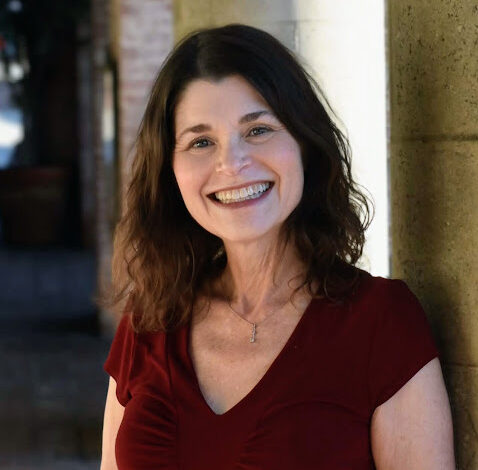
About Dr. Michelle Finkel

Dr. Michelle Finkel

Dr. Finkel is a graduate of Stanford University and Harvard Medical School. On completing her residency at Harvard, she was asked to stay on as faculty at Harvard Medical School and spent five years teaching at the world-renowned Massachusetts General Hospital. She was appointed to the Assistant Residency Director position for the Harvard Affiliated Emergency Medicine Residency where she reviewed countless applications, personal statements and resumes. Read more

Receive FREE Insider Medical Admissions Tips.

Listen to Dr. Finkel’s interview on the White Coat Investor podcast:

Listen to Dr. Finkel’s interview on the FeminEm podcast: