
Blog Archives

So Easy for You to Do: Medical School and Residency Interview Thank You Notes

A few years ago a medical school applicant wrote me to say that the dean of the school at which she had recently interviewed called her to tell her that he was impressed with her candidacy and the hand-written thank you note she had sent. The client thanked me for my help and the thank you note tip I had given her. As you might have guessed, she was admitted to that medical school.

Writing a thank you note after a medical school or residency interview is so easy for you to do, and it can go a long way.

Now, I get asked by clients what the best way to send post-interview thank you notes is – email or snail mail. I strongly advise sending your thank you note by good old USPS. The reasons are:

1) Email may be viewed as lazy. Handwritten notes demonstrate you’ve put some time into being appreciative.
2) Email can be deleted without much thought. Emotionally, it’s harder to throw someone’s handwritten note in the trash.

Get your handwritten thank you notes in quickly. The night after you’ve completed your interview or the next day is a good time to write and send.

Tags: , ,

What Is the One Thing You’ve Learned…?

I was with my children at a four year-old’s birthday party a few years ago when I met the grandfather of the birthday-boy. As it turned out, before retiring, the man had been on the admissions committee of a prestigious medical school for decades.

So, I asked him, “Looking back at all of those years of experience, what is the one thing you learned from interviewing medical students?”

The man chuckled and said, “They have no idea what they’re getting themselves into.”

In life, we never have any idea what we’re getting ourselves into, but I think of this man every time I practice the question “What will you like least about being a doctor” or “…least about being a [insert your medical specialty here]” with my medical school and residency mentees, respectively. Saying you’ll love everything about being a physician or psychiatrist or pediatrician or internist sounds disingenuous and naive. You need to show that you have some idea what you’re getting yourself into.

Having said that, I would avoid tacky topics like money. And talking about how horrible night shifts are is not going to win you many points. But a sophisticated applicant can infer what the challenges will be in medicine or in her specialty and can express them with aplomb.

…As with everything, practice your answer in advance.

Tags: , ,

Accomplished, Not Lovely

Last week I went to hear the author Nicole Krauss speak about her recently-released novel Forest Dark. I am a big fan of Krauss’ writing. The day I heard the author speak, she had published an opinion piece in the NYT Sunday Magazine called “Do Women Get to Write with Authority?” In the article, Krauss speaks about the lack of authority that women writers have compared to men, and specifically, how female artists’ work is often characterized as “lovely,” a word she describes as lacking in “independent power.”

I must admit that I sometimes use the word “lovely” (both for women and men) when I like someone. But Krauss made me think about the word in the context of achievement – not personality – and her point is well-taken.

What does this have to do with medical school and residency admissions? When you interview, you want the faculty member to leave the table saying you were “accomplished,” not “lovely.” Many applicants miss this point: You don’t want to simply be liked; you want to be seen as worthy. It’s important that you focus on that important goal as you practice for interviews.

As an aside, I have not gotten a hold of Forest Dark yet, but I would strongly recommend Krauss’ Great House and History of Love.

Tags: , ,

Don’t Let Other People Freak You Out

I started Insider Medical Admissions over a decade ago, so I’ve been in admissions consulting for a while. I’m pretty good at spotting trends. Every year about now I start getting emails from clients saying they’re worried about their lack of (or minimal number of) interview invitations. Yes, even as early as mid-September folks are concerned. They say they have a classmate who says he’s gotten an interview invitation or they read online that others are being contacted with invites.

Sure, it’s possible some people are getting very, very early interview invitations. But, it’s rare and should not affect your confidence. After all, according to Amy Cuddy, whom I’ve referenced before, confidence is the name of the game when it comes to interviews.

So, simply stop checking online and minimize conversations about interviews with others. If you are in the thick of the season and you still haven’t gotten any interviews, then you’ll need to reassess and act. But for now, put in ear plugs. This process is so very stressful; you certainly don’t need to seek out more anxiety-provoking information (and who even knows if it’s accurate anyway!).

Tags: , ,

Medical School Interview Questions: How to Handle the Illegal Ones

In the United States, a professional interview is subject to basic legal rules. Specifically, admissions officers should refrain from asking medical school interview questions that are not relevant to the position the interviewee is seeking. Questions about race, religion, sexual orientation, and marital or family status fall into this category.

If you are asked these types of questions, you can simply answer – if it’s not distasteful to you – or respond by addressing the intent of the question without revealing personal information. (“I think you’re asking if my home life will affect my ability to carry out my medical school studies or my clinical duties. I can assure you it won’t, and I’ll complete my full tenure here at your school.”)

If you have the opportunity to give feedback to the institution about your medical school interview questions or experience, you can consider doing so after the interview. When I was interviewing for residency, I was asked by a faculty member if I had a boyfriend. After the interview day, I talked to a faculty mentor at my school who reported the situation to the other institution. The faculty member who asked me the illegal question was no longer permitted to interview.

Tags: , ,

About Dr. Michelle Finkel

Dr. Michelle Finkel

Dr. Finkel is a graduate of Stanford University and Harvard Medical School. On completing her residency at Harvard, she was asked to stay on as faculty at Harvard Medical School and spent five years teaching at the world-renowned Massachusetts General Hospital. She was appointed to the Assistant Residency Director position for the Harvard Affiliated Emergency Medicine Residency where she reviewed countless applications, personal statements and resumes. Read more

Receive FREE Insider Medical Admissions Tips.

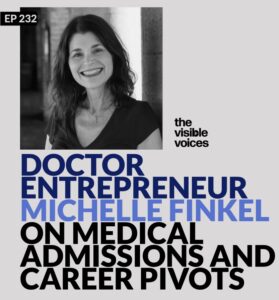
Listen to Dr. Finkel’s interview on The Visible Voices podcast: 


Listen to Dr. Finkel’s interview on the White Coat Investor podcast:

Listen to Dr. Finkel’s interview on the FeminEm podcast: