Blog Archives

Can a Medical School See the Names of the Other Medical Schools You Apply to?

Medical school applicants sometimes worry about adversely affecting their chances of admission because they might “offend” one school by applying to others. Good news: Schools will not know which other institutions or how many other institutions you applied to through AMCAS.

However, later in the season, medical schools at which you are accepted will be able to see at which other schools you are holding acceptances. But, of course, at that point, it’s too late for that information to harm you.

So, rest assured, applying broadly will not adversely affect your chances at an individual school.

Tags: , ,

Personal Statement Russian Roulette #2

Last week I showcased a personal statement mistake to avoid. Here’s another common one simplified in a stop-motion Guru on the Go© video. This advice applies to residency applicants as well.

Tags: , ,

Tomorrow Belongs to Those Who Can Hear it Coming

That’s right: Tomorrow, May 1 is the day before the official open date of AMCAS 2019. (Okay, I know that sounds confusing, but originally the AMCAS open date looked to be May 1 and is still posted as such in multiple locations. As it turns out, it is May 2.) So, at 9:30am EST on Wednesday, you can start inputting your data.

Because of rolling admissions, submitting a complete application early in the cycle has distinct advantages at many schools.That doesn’t mean you should submit suboptimal written materials; it means you should start early enough (now, at the latest!) that you are offering your best work.

Rolling admissions means that a school takes applications in the order in which they are received and makes decisions about interviews and then acceptances, accordingly. So, as times goes by, there are fewer interview and admissions offers remaining to be made.

If your application is not complete, your candidacy may not be evaluated early when there are more opportunities for interviews and admissions. So, if you have not already, get started immediately. It could make a huge difference in your available opportunities.

Tags: , ,

DO vs. MD

Thinking about a medical school application for 2018, I’ve had a few industrious pre-meds ask me about DO school. There was an excellent article in the New York Times a few years ago about what doctors of osteopathy do and how their admissions criteria are different from allopathic schools’. It’s here and worth a read.

The topic of DO schools is an enormous one. A few quick points many candidates don’t know about DOs:

1. Many doctors of osteopathy practice medicine just like allopathic doctors do. I do per diem emergency shifts at Kaiser and work with many DOs. Candidly, I usually do not know which colleagues have osteopathic degrees and which have allopathic ones unless I see a prescription blank or a signed computer note.

2. If applying to osteopathic school, candidates are generally better off with at least one (strong) letter of recommendation from a DO supervisor.

3. Osteopaths currently take the COMLEX for their board tests, instead of the USMLE. If an osteopathic medical student wants to enter an allopathic residency, s/he may need to take the USMLE in addition to the COMLEX. On the other hand, there are many allopathic residencies that accept the COMLEX. Also, there is talk that in the future (when exactly is unclear, however) there may be just one board test that both groups take.

4. The osteopathic Match occurs before the NRMP Match, a fact that can be difficult for osteopaths applying to both types of residencies. If those applicants are successful in the osteopathic Match, they cannot enter an allopathic residency. If, on the other hand, they wait and enter the NRMP Match, they run the risk of simply not matching.

Again, this topic is complicated and nuanced, but the DO option is a great one for some applicants.

Tags: , , ,

Some People Have Real Problems

The residency and medical school application processes are anxiety-provoking, but in honor of Thanksgiving, I’m posting this guest blog from CrispyDoc David Presser about a truly stressful, heartbreaking choice a patient recently had to make…

Years ago, I bought an album because the title caught my eye: Some People Have Real Problems. I was browsing used CDs in a music store back when both of those existed, and I felt the universe trying to restore perspective to my personal pity party.

Fast forward a decade, and I had fallen off the wagon again into whining doctor mode: headed into my second weekend night shift in as many days. The first night had been a killer, where the spigot of patients opened to a steady gush around 1 A.M. and all four of the late shift docs stayed several hours past the end of their shift to flush the proverbial toilet that our waiting room had become.
Tags: , ,

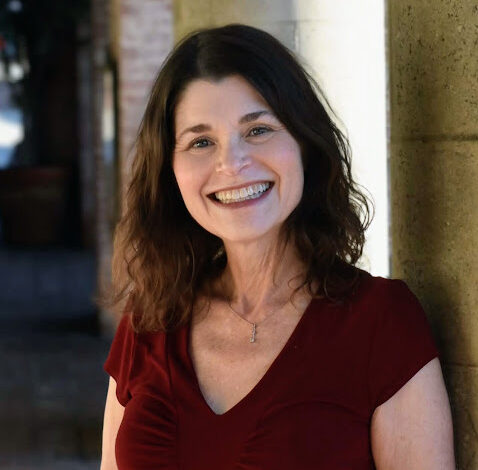
About Dr. Michelle Finkel

Dr. Michelle Finkel

Dr. Finkel is a graduate of Stanford University and Harvard Medical School. On completing her residency at Harvard, she was asked to stay on as faculty at Harvard Medical School and spent five years teaching at the world-renowned Massachusetts General Hospital. She was appointed to the Assistant Residency Director position for the Harvard Affiliated Emergency Medicine Residency where she reviewed countless applications, personal statements and resumes. Read more

Receive FREE Insider Medical Admissions Tips.

Listen to Dr. Finkel’s interview on the White Coat Investor podcast:

Listen to Dr. Finkel’s interview on the FeminEm podcast: