
Blog Archives

Sesame Street Can Help You Write a Great Medical School Personal Statement

I learned an interesting fact years ago: When small children don’t understand something, they will simply tune it out and start to engage in another activity. That’s why great shows like Sesame Street use professionals to make sure their content is precisely age-appropriate. Children – and adults – don’t like being confused, and you can’t blame them.

In their personal statements, some medical school candidates make the mistake of referring to an accomplishment without explaining it. This is understandable since we are all intimately familiar with what we’ve done. The problem is that the vast majority of application readers are way too busy to do independent research or go back and forth checking an applicant’s supporting documents if she writes something that isn’t crystal clear.

I remember a talented candidate I advised who showcased an award she had won. She listed the name, but didn’t explain what it was. When I asked her, she told me the award was an academic honor given to only the top 1% of students out of several thousand. I was impressed! And, I asked her to rewrite the section so that her admissions readers would give her the credit she deserved for that extraordinary accomplishment. Because the medical school admissions process is so competitive, what you fail to adequately explain counts against you.

On a related topic, don’t expect a reader to understand something in your essay because it’s explained in your AMCAS activities. Different faculty members will approach the application in different ways, so – to get “full credit” for your accomplishments – you need to assume that your reader is seeing your essay first, independent of your AMCAS activities. Ensure your personal statement can stand alone and doesn’t rely on your AMCAS Activities section for clarification.

Contact me for help with your written materials. I have read thousands of essays, and I personally review every document sent to me.
Tags: , , ,

Start Your Engines…

The medical school application cycle is revving up soon, so it’s time to get started on your candidacy. Here’s an article I wrote for Student Doctor Network a few years back called “Ten Ways to Improve your Medical School Application.” The piece includes statistical truths, strategies for optimizing your approach, and philosophical guidance. It covers grades, clinical experience, letters of recommendation, where to apply, the MCAT, the personal statement, and your happiness, among other critical factors. Enjoy!

Tags: , , ,

Pared to the Bone

I heard a great Fresh Air interview of Siddhartha Mukherjee, who was a lovely acquaintance of mine at Harvard and who has since won the Pulitzer Prize for his book The Emperor of All Maladies. Sid is a hematologist/oncologist clinician/scientist who has a new book out called The Song of the Cell. 

Terry Gross asked Sid how he successfully writes for both the scientific community through his journal articles and for lay people through his books – two different skill sets. Sid responded by explaining the importance – for any genre – of crafting manuscripts that are “pared to the bone,” meaning they avoid verbiage. His recommendation was excellent advice for any writer, even one who is crafting a personal statement. Take a listen to the full interview with Dr. Mukherjee here

Tags: , , ,

What Makes New Yorker Articles So Good?

I have a dear medical school friend who gifts my family the New Yorker every year at the holidays. The New Yorker is one of the best Chanukah presents we receive, and we get to appreciate it weekly, which makes it even better than the usual candy and fruit baskets. What makes New Yorker writing so good is that the journalists offer facts and then let the reader make his/her own assessments. A subject’s own words or the description of his/her home office or clothes or even gait tells it all. There is no need for convincing.

Currently, as I’m editing medical school essays, I’m reminding my clients of the importance of that principle in writing a strong personal statement. To an admissions reader who hasn’t yet met you, you are what you’ve done. It’s the facts that matter. You need to use substantive examples of your achievements to demonstrate your worthiness for a potential medical school position. Evidence is persuasive; use it!

Tags: , , ,

Is Your Personal Statement a Little Too Personal?

As medical school applicants are crafting their essays and residency candidates are starting to think about theirs, I’m posting a short piece by a guest blogger today: Dr. David Presser graduated from UCSF Medical School, completed his emergency medicine residency at UCLA/Olive View and his MPH at Harvard. He wrote an excellent primer on getting into an emergency medicine residency. Here’s today’s blog written by him:

Picture, if you will, a residency admissions committee member beneath a halo of light reading applicant essays in her office at midnight. Caffeine on her breath, crumpled white coat next to her desk chair, she is making steady progress on the never-ending stack of applicant files until she picks up a residency personal statement that begins, “I first became interested in internal medicine when Grandma was diagnosed with cancer…” Pulling out her hair by the fistful, she tosses the file into the trash. That cancer may not have killed your grandma, but it just might have killed your application.

Many students devote a significant portion of their ERAS essays to describing a universal experience that may have piqued their initial interest in a specialty. A residency admissions committee member does look for evidence of how your fundamental connection to humanity will make you an empathetic and skilled physician. The problem comes when an applicant starts to make the reader feel like s/he is providing counseling to the applicant, that is, when the candidate uses language that could strike the wrong reader as inappropriate for a professional application. The admissions committee can handle empathetic writing; however, if they suspect you mistook your essay for the journal under your pillow, they may not be forgiving.

Think carefully about the topics you choose. With all due respect to each of us who has had a family medical catastrophe, you can estimate the prevalence of cancer among the elderly and conclude that starting an essay with the description of a grandparent’s battle with cancer is not going to catch the reader’s attention. Unfortunately, just because it is genuine, it may not be compelling reading or a useful means to distinguish you from the hundreds of residency applicants whose essays share similar themes.

There are exceptions. You can be forgiven for including a common topic if it directly ties into highlighting a unique personal accomplishment. Perhaps grandpa’s prostate cancer diagnosis led you to seek out a research position with a faculty member at your local university lab where you were directly involved in sequencing a promising new molecular marker for prostate cancer. Give the generic topic a brief mention and transition rapidly into how it demonstrated that you are a mover and shaker who took a universal experience and, by virtue of your work ethic and intellectual curiosity, turned it into a contribution to science.

You get a pass on writing about universal experiences if you can pull off a convincing reason to keep the midnight reader going; otherwise, keep your essay distinctive and befitting the professional you hope to become.

Tags: , , ,

About Dr. Michelle Finkel

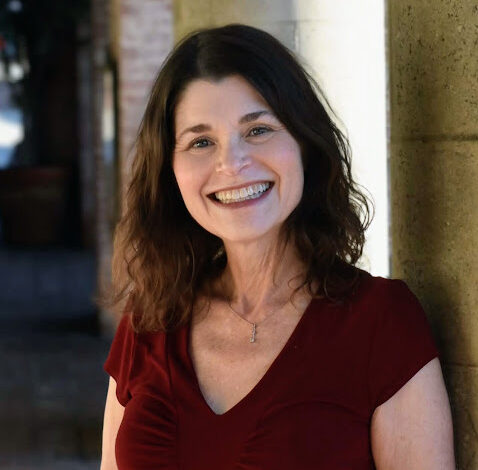
Dr. Michelle Finkel

Dr. Finkel is a graduate of Stanford University and Harvard Medical School. On completing her residency at Harvard, she was asked to stay on as faculty at Harvard Medical School and spent five years teaching at the world-renowned Massachusetts General Hospital. She was appointed to the Assistant Residency Director position for the Harvard Affiliated Emergency Medicine Residency where she reviewed countless applications, personal statements and resumes. Read more

Receive FREE Insider Medical Admissions Tips.

Listen to Dr. Finkel’s interview on the White Coat Investor podcast:

Listen to Dr. Finkel’s interview on the FeminEm podcast: