Blog Archives

Medical School Help: What are the Next Steps Once the AMCAS is Submitted?

Once your AMCAS is in, what can you do next to best prepare for what’s to come in the medical school admissions process?

Here are a few tips:

1. Start to draft secondary essays. Even if you haven’t yet received the prompts, you can begin to craft responses to common themes like “how would you add diversity to our school?” and “describe an extracurricular activity that might be of interest to the committee.” Good writing takes time, but if you wait for the onslaught of secondary applications, you won’t be able to impart your essays with your highest quality effort.

2. Get a head start on preparing for the medical school interview. Practice, practice, practice. Start mocking up answers to interview questions so that you distinguish yourself.

3. Consider what you want. Do some soul searching to determine what you are really seeking geographically, philosophically, and educationally. You want to make considered decisions when the time comes.

Tags: , ,

Be A Dirtbag Millionaire

For many of us, medical training means taking on significant debt and learning to manage complex personal finances. Many financial advisors “specialize” in physicians (like wolves who specialize in sheep?), and young doctors have a reputation as easy targets.

How can you defend yourself against financial predators, kill your debt early, and learn to manage your own portfolio? (And where can you even learn what a portfolio is?) Crispy Doc offers a blog dedicated to financial literacy for the newly minted physician with an emphasis on early financial independence for doctors.

Check out his blog, and learn from Crispy Doc’s recent Student Doctor Network article.

Tags: , ,

Brevity

I’ve started editing a lot of medical school essays of late, and I want to give a shout out to the importance of brevity. I focus on a work count of 700 or fewer for my advisees for a few reasons: First, I’ve found that that number is just the right balance of content and streamlining. Under 700 words for an admissions essay leads to a lack of substance, and more lends itself to meandering writing.
Second, your reader is likely stuck reviewing tens or even scores of applications in a short period of time. S/he is looking to spend as little time as possible on your written materials, while still getting a good flavor for your candidacy. Don’t burden your reader with verbiage.
Here’s a helpful trick: Imagine AMCAS or ERAS is charging you $10 per word. How would you keep costs down?
Tags: , ,

Geography is Giant

When I was a medical student applying for emergency medicine residency programs, a well-meaning dean gave me some bad advice. I was determining the order of my rank list and was particularly concerned about one program that had an excellent reputation but was in a city I didn’t like. The dean told me, “You’ll be so busy during residency it won’t matter where you live.” Luckily, the advice rubbed me the wrong way, and I wholeheartedly disregarded it. As I’ve said in a recent blog entry (and others in the past), where you live for your medical training – medical school, residency, or fellowship – is as important as the quality of your training program. The reasons are several-fold:

1. Medical training is extremely time-consuming, and you want to be in a city you can enjoy fully when you’re able to blow off steam.

2. Medical training is extremely stressful, and you want to be in a city where you have social support.

3. Medical training is not completed in a vacuum. Your personal life continues. If you’re single you may meet someone and end up staying in the city where you have trained for the rest of your life (gasp!). If you’re in a long-term relationship you may decide to have children or may already have them. Down the road you may not want to relocate your family.

Not everyone gets the opportunity to go to medical school or train in residency and fellowship programs in a city s/he likes. But you can make choices that will increase your chances.

Tags: , , ,

After Your Residency or Medical School Interview: What’s the Value of the Second Look?

After interviews – if permitted by the institution – there are several ways you can communicate with a medical school or residency. My favorites are brief thank you notes and well-written letters of interest.

But what about the “second look?” I’ve had many mentees ask me if re-visiting a school or training program after the interview day is valuable. Unfortunately, there may not be a definitive answer to this question because how a second look is perceived varies by institution.

The cons of the second look are cost and time. And perhaps even worse, there is the risk that you are imposing on the school or program. You don’t want your request for a second look to work against your candidacy. On the other hand, the pros of a second look are that demonstration of interest and enthusiasm that many schools and programs are seeking.

If you are a pre-med and are wait listed at a medical school, I would generally recommend a second look if you can swing it. After all, you have every right to visit the institution you may be attending. If you go for a second look in this scenario, make sure to do a formal visit: Let the admissions office or dean’s office know you would like to spend the day and ask if you might have an opportunity to meet with students and even an admissions officer to support your candidacy.

If you are a residency applicant, it’s hard to say if a second look will help or not. A residency director friend of mine says that a visit from someone who travels from far away might improve a candidate’s standing by a few slots on the rank list at her program. That sounds like a tepid endorsement at best… If you are considering a second-visit, make sure to speak to the program coordinator. S/he might advise you against it or, on the contrary, let you know it’s appreciated by the residency director.

As we all know, the residency and medical school interview scene is already stressful and expensive, so unless you are a wait listed pre-med – with all other things being equal – I generally would not push yourself hard to do that second look.

Tags: , ,

About Dr. Michelle Finkel

Dr. Michelle Finkel

Dr. Finkel is a graduate of Stanford University and Harvard Medical School. On completing her residency at Harvard, she was asked to stay on as faculty at Harvard Medical School and spent five years teaching at the world-renowned Massachusetts General Hospital. She was appointed to the Assistant Residency Director position for the Harvard Affiliated Emergency Medicine Residency where she reviewed countless applications, personal statements and resumes. Read more

Receive FREE Insider Medical Admissions Tips.

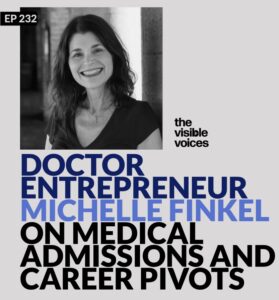
Listen to Dr. Finkel’s interview on The Visible Voices podcast: 


Listen to Dr. Finkel’s interview on the White Coat Investor podcast:

Listen to Dr. Finkel’s interview on the FeminEm podcast: