Blog Archives

Accomplished, Not Lovely

A few years back I went to hear the author Nicole Krauss speak about her novel Forest Dark. I am a big fan of Krauss’ writing (especially the History of Love in case you are looking for something wonderful to read). The day I heard the author speak, she had published an opinion piece in the NYT Sunday Magazine called “Do Women Get to Write with Authority?” In the article, Krauss speaks about the lack of authority that women writers have compared to men, and specifically, how female artists’ work is often characterized as “lovely,” a word she describes as lacking in “independent power.”

I must admit that I sometimes use the word “lovely” (both for women and men) when I like someone. But Krauss made me think about the word in the context of achievement – not personality – and her point is well-taken.

What does this have to do with medical school and residency admissions? When you interview, you want the faculty member to leave the table saying you were “accomplished,” not “lovely.” Many applicants miss this point: You don’t want to simply be liked; you want to be seen as worthy. It’s important that you focus on that important goal as you practice for interviews.

Tags: , , ,

Happy Medical Training: An Oxymoron?

Medical school and residency training usually decrease one’s happiness for several reasons. Happiness researchers have demonstrated that a feeling of control and the amount of spare time one has both correlate with happiness. Both of those factors are limited during med school and residency. Relationships are also correlated with happiness, and those can be squashed during medical training as well.

I’m not trying to be a downer here! I want to encourage applicants to consider this happiness quotient when selecting an institution and training program. A lovely client recently emailed me to ask if he should consider medical schools’ residency program director scores in deciding where to matriculate. (He had already gotten multiple acceptances!) I advised him to consider where he would be happiest instead. If you are able, maximizing your contentment by choosing an institution that fosters your greatest happiness is key. Geography; proximity to family, friends and community; and a location that provides an opportunity to enjoy hobbies during limited free time are significant.

Excellent training is important, but, in the end, many programs turn out equally qualified clinicians. At least consider your well-being as a factor in selecting where you might be for the next three plus years of your life.

Tags: , , ,

Inside a Residency Director’s Mind

Residency Interview If you were a program director (PD), you’d be trying to avoid two big headaches, as you assessed a residency candidate:

1) Will this person be competent and collegial? A PD does not want to get complaints from patients, faculty, or other services about his/her residents.

2) Will this person leave the program prematurely? A PD does not want to scurry around to fill an open call schedule or residency slot.

As you approach you interviews, consider how you can demonstrate your competence and collegiality (academic success, strong evaluations, extracurriculars that demonstrate teamwork) and commitment to the field and residency program (research projects in the specialty, knowledge about the program and city). Ensuring the PD knows you are not going to cause him/her headaches is half the battle.

Tags: ,

You Never Get a Second Chance to Blow a First Impression

I have received a lot of questions about interview attire; I have two rules to guide applicants:

1. Do not be noticed for your clothes. You want to be remembered for your accomplishments, not your attire. Years later, I still remember the applicant who arrived in a Bugs Bunny tie. I also recall the applicant who arrived in jeans. (He packed his interview clothes, checked his luggage, his bags were lost, and he had nothing else to wear for his early morning interview. Keep your clothes with you – carry-on.)

2. Be comfortable. No heels that are so high you are in too much pain to take the tour. No coat so light – but stylish! – that you can’t walk out of the building.

Tags: , ,

Being the Squeaky Wheel

medical school application

Several years ago I helped a strong applicant who had been rejected by a top medical school. He thought he was a very good fit for this particular institution, so he called the school to make his case. Surprisingly, after the applicant’s phone call, the school granted him an interview, reversing their original rejection.

It was at this time when I met the applicant; we conducted a mock interview, so he would be well-prepared.

Ultimately, after being initially rejected, this applicant was admitted to that top school.

Of course, this is an exceedingly rare occurrence. (Just to clarify: In seven and a half years as a professional coach, I’ve only seen this happen once!) But to me, the moral of this story is that it is worth being assertive (not aggressive) in the medical school and residency admissions processes: Send an update letter, call institutions (politely) to inquire about your status (if they do not expressly prohibit phone calls), and be proactive during your interviews.

Tags: , ,

About Dr. Michelle Finkel

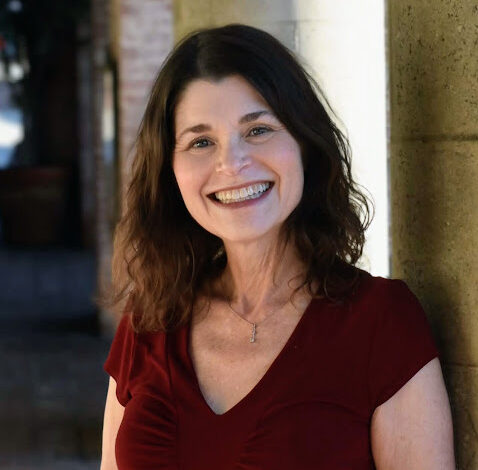
Dr. Michelle Finkel

Dr. Finkel is a graduate of Stanford University and Harvard Medical School. On completing her residency at Harvard, she was asked to stay on as faculty at Harvard Medical School and spent five years teaching at the world-renowned Massachusetts General Hospital. She was appointed to the Assistant Residency Director position for the Harvard Affiliated Emergency Medicine Residency where she reviewed countless applications, personal statements and resumes. Read more

Receive FREE Insider Medical Admissions Tips.

Listen to Dr. Finkel’s interview on the White Coat Investor podcast:

Listen to Dr. Finkel’s interview on the FeminEm podcast: