
Blog Archives

How to Turn that Elephant in the Room into a Cuddly Kitten

No medical school or residency application is perfect: That’s why it’s important you have a well-considered strategy for managing interview questions about gaps in your candidacy. Addressing a bumpy freshman year (pretty common) or a suboptimal Step 2 score with aplomb can make a big difference in how an interviewer, admissions committee, or program director perceives you.

Check out this KevinMD article I wrote a few years back about how to be upfront regarding a major deficiency in your candidacy and how to demonstrate strategically — with evidence from the remainder of your application — that the weakness is not representative of your abilities.
Tags: , , ,

Try a Residency Bootcamp

I was recently speaking to a medical student with excellent foresight, who was asking me what he could do to prepare himself for residency. I suggested reviewing the basics – perhaps by perusing a favorite clinic handbook – of how to work up common chief complaints like chest pain, shortness of breath, abdominal pain, back pain, among others. It was timely, then, that I read an article about Transition to Residency classes offered at the majority of medical schools. These intensive courses help medical students refresh their knowledge about clinical approaches, so they can hit the ground running when internship starts. 

If a Transition to Residency class is robust and offered at your institution, I would recommend taking it.

Also, when thinking about preparing for residency, I advised the student to consider ways to make life as smooth as possible: When I was in training, I splurged to pay for a laundry service. I never missed the money; instead of spending my downtime at a laundromat or an apartment complex laundry room, I was able to sleep a little more. 

Of course, I had to be frugal during residency, as many others do, but doing one or two things that can make your life better can pay dividends.

Tags: , , ,

Medical School and Residency Admissions: It’s Not Personal

When I was in my second year of medical school, a third-year student (who later also went into emergency medicine, as I did) came to speak to our class about being on the wards. He gave an animated talk about how important it was to recognize that when residents, attendings, or nurses hollered at us on our clinical rotations, 99% of the time, it wasn’t personal. He likened the situation to Boston traffic – how drivers lean on their horns for little cause because they are simply frustrated about their days.

It’s not personal, he said.

I say the same to those I mentor. Candidates get an interview at one highly ranked institution but rejected at what is considered a lesser one with no clear cause. Faculty interviewers mix applicants up with one another; some turn up wholly unprepared – reading students’ applications for the first time during the interview itself. Remember: It’s not personal. This process is arduous and cruel, and most candidates, faculty, and program coordinators are tired and doing their best in a dysfunctional system.

Tags: , , ,

Five ERAS Platform Quirks to Heed

On September 7th, ERAS will open for submission, so it’s time to get moving on your written materials. Let’s briefly cover five quirks of the ERAS platform to help you get through the drafting process. The ERAS platform…

1) Does not support italics. While journal articles and some phrases (e.g. “summa cum laude”) should be italicized, don’t be surprised when you can’t.
2) Prompts you for a supervisor for each activity. In some cases, you simply may not have one, but whenever you can, name someone. A name validates the experience.
3) Prompts you for average hours per week for each activity. It can be difficult to calculate this number for certain experiences, especially those that are intermittent, but it’s worth making your best estimate rather than leaving the question blank.
4) Offers space to include a “reason for leaving” for each activity. Don’t skip this section, but keep your answers brief.
5) Limits you to 1020 characters for experiences, 510 for the interruption in the medical training section, and 510 for each of the awards sections. Be aware of these limits as you write, so you are not furiously cutting later.  

For tips on how to craft your ERAS, check out these 15 ERAS tips.

Contact me for help with this weird, wild process.

Tags: , , ,

Responses from Program Directors are as Valuable as the Email They’re Written On

A residency candidate asked me to review an email a program director (PD) had sent him after interview day. The candidate wanted to know if I had any insights into the PD’s intent: Was the PD sending a generic note or was he really interested in the applicant?

I told the applicant honestly: Who knows and who cares?

I wasn’t trying to be dismissive. The point is that it’s impossible to know what a PD is thinking. Unfortunately, I’ve seen applicants heartbroken by false hope they read into a PD’s comments. More importantly, what a PD says should not affect your rank list anyway. The algorithm requires you to put your first choice first and your second second, etc. (More on that in an upcoming January blog post.)

As they say, kisses aren’t contracts and presents aren’t promises. Don’t put deep thought into those PD notes because they don’t guarantee a thing and, as we say in clinical medicine, they don’t change management.

Tags: , , ,

About Dr. Michelle Finkel

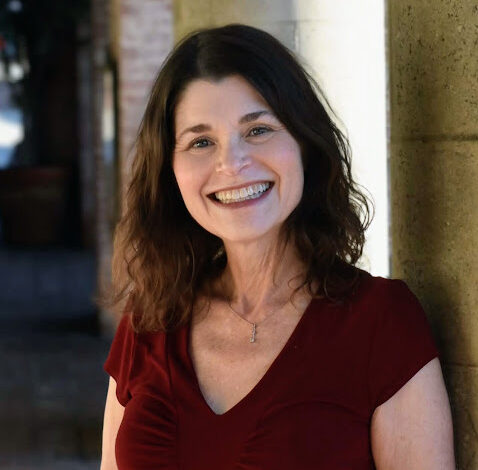
Dr. Michelle Finkel

Dr. Finkel is a graduate of Stanford University and Harvard Medical School. On completing her residency at Harvard, she was asked to stay on as faculty at Harvard Medical School and spent five years teaching at the world-renowned Massachusetts General Hospital. She was appointed to the Assistant Residency Director position for the Harvard Affiliated Emergency Medicine Residency where she reviewed countless applications, personal statements and resumes. Read more

Receive FREE Insider Medical Admissions Tips.

Listen to Dr. Finkel’s interview on the White Coat Investor podcast:

Listen to Dr. Finkel’s interview on the FeminEm podcast: