Accomplished, Not Lovely

Pre-pandemic, I went to hear the author Nicole Krauss speak about her novel Forest Dark. I’m a big fan of Krauss’ writing. The day I heard the author speak, she’d published an opinion piece in the NYT Sunday Magazine called “Do Women Get to Write with Authority?” In the article, Krauss highlights the lack of power women writers have compared to men, and specifically, how female artists’ work is often characterized as “lovely,” a word she describes as lacking in “independent power.”

I must admit that I sometimes use the word “lovely” (both for women and men) when I like someone. But Krauss made me think about the word in the context of achievement – not personality – and her point is well-taken.

When you interview for medical school or residency, you want the faculty member you’ve met to leave the table saying you were “accomplished,” not “lovely.” Many applicants miss this point: You don’t want to simply be liked; you want to be seen as worthy. It’s critical that you focus on that important goal as you practice for interviews, crafting strategic responses to potential questions. 

As an aside, I would strongly recommend Krauss’ History of Love, Great HouseForest Dark and To Be A Man.


I’m Worried about Emergency Medicine

While my career has been a good one until now, I’m increasingly worried about the field of emergency medicine. See my October 21 blog on the current dearth of emergency medicine jobs. The American College of Emergency Physicians (ACEP) recently published a report on the future of the field’s workforce, concluding that there will be nearly 10,000 too many emergency physicians by 2030.

Dr. Thomas Cook published a piece recently called A Few Feasible Solutions to EM’s Workforce Crisis. He demonstrates a healthy skepticism for the possible solutions that ACEP proposed. See his piece here.

In the meantime, corporate emergency medicine is depleting some physicians. A group has even considered unionizing.

In addition, burnout has been a big problem for the field – even before the pandemic. 

Medical students, as great as the specialty of emergency medicine is in many ways, I would be remiss if I didn’t tell you to consider these issues seriously when making a decision about your future field.

Tags: , , ,

AAMC Report on Residents 2021

The AAMC recently published their Report on Residents 2021. Of note,

  • The percentage of medical residents who identify as Black or African American and as Hispanic, Latino, or of Spanish origin has increased since last year.
  • Women make up the vast majority in obstetrics and gynecology (85.2%) and pediatrics (72.7%).
  • Only 27.0% of the 2020-21 graduates intended to train in the specialties they had listed as their preference when they began medical school.
  • The majority of medical residents (57.1%) who completed residency training from 2011 through 2020 practice in the state where they completed their residencies.
  • In a tip of the hat to my favorite state, physician retention after medical residency is highest in California (77.8%).

There are more goodies; the information is summed up in this table.

Tags: , , ,

Medical School Interviews: Preparing for your Virtual MMI

While the majority of medical school interviews are traditional, an increasing number of institutions (including dental schools) are using the MMI platform. The MMI (multiple mini interview) is a format that uses several timed stations to assess applicants’ interpersonal skills and judgment. Despite the virtual approach, a number of schools are still using MMI. A few things to note about MMI interview questions:

1) They are not always medically related. You may be asked to manage an everyday problem (e.g. a disagreement at the supermarket).

2) They are not always situational. You need to be prepared for conventional questions too (e.g. What are your three greatest strengths?).

3) Schools are trying to assess whether you can skillfully employ important techniques and demonstrate professionalism. Underlying topics might include your ability to offer effective counseling, your understanding of patient-doctor confidentiality, your ability to diffuse a heated situation, or your capacity to admit wrongdoing, etc.

4) Make sure you know what structure the school is using and employ the right mindset: Working with an actor is different from executing a group project (especially remotely!), which is, in turn, different from answering questions about your opinions. 

5) Practice MMI questions before you “go” to your interview. Even if you have excellent social skills, there are techniques you should hone to expertly manage the challenging MMI format. 

Contact me for help. 

Tags: , , ,

The Residency and Medical School Application Process: Moving Past Impostor Syndrome

First described by psychologists Drs. Suzanne Imes and Pauline Rose Clance in the 1970s, impostor phenomenon occurs among high achievers who cannot easily internalize their successes. They often externally attribute their accomplishments to luck and worry that others will eventually realize they are frauds.

Recognize this phenomenon of self-doubt?

You are not alone. Although many people suffer in silence (as they do not want to be revealed for what they perceive to be major deficiencies), the syndrome is quite common, especially in medical school. According to one 2016 study, almost a quarter of male medical students and nearly half of female students surveyed suffered with impostor syndrome. The phenomenon can be associated with depression, burnout, and anxiety. The American Psychological Association offers a few tips for overcoming impostor syndrome including speaking to mentors, recognizing what you excel at, and talking to a professional if necessary. 

Here’s a fun article on imposter syndrome by Joelle Borhart MD, the Associate Program Director at Georgetown University. I also recommend Amy Cuddy’s TED talk with over 63 million views. 


About Dr. Michelle Finkel

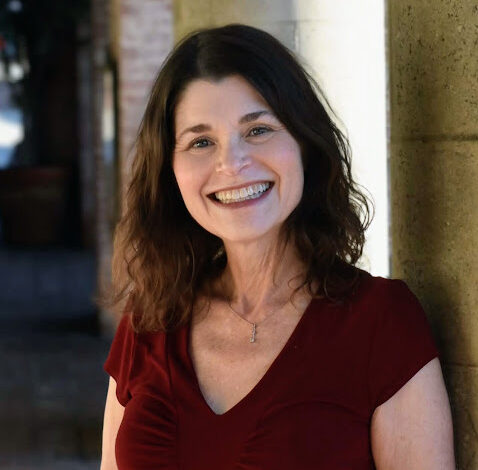
Dr. Michelle Finkel

Dr. Finkel is a graduate of Stanford University and Harvard Medical School. On completing her residency at Harvard, she was asked to stay on as faculty at Harvard Medical School and spent five years teaching at the world-renowned Massachusetts General Hospital. She was appointed to the Assistant Residency Director position for the Harvard Affiliated Emergency Medicine Residency where she reviewed countless applications, personal statements and resumes. Read more

Receive FREE Insider Medical Admissions Tips.

Listen to Dr. Finkel’s interview on The Visible Voices podcast: 


Listen to Dr. Finkel’s interview on the White Coat Investor podcast:

Listen to Dr. Finkel’s interview on the FeminEm podcast: