Blog Archives

Highly Recommended, Paid Summer Opportunity – AAAS Mass Media Fellowship

I was an American Association for the Advancement of Science (AAAS) Mass Media Science and Engineering Fellow in 1995 (during medical school). The program was truly fantastic and life-altering.

The 10-week summer program places science, engineering, and mathematics students at media organizations around the country, including National Public Radio, the Los Angeles Times, and WIRED. Fellows learn to communicate complex scientific issues for the lay public. They are provided a stipend of $8000 for the summer, plus travel expenses to and from AAAS and their media sites.

I worked at the Oregonian in Portland and had a tremendous time learning how to write and edit effectively. I also gained an appreciation for the impactful influence journalists can have on medical and public health topics. The Mass Media Fellowship is really an amazing program.

Applications for this year’s AAAS Mass Media Science and Engineering Fellowship just opened on October 1 and will remain available through January 1, 2024. Check eligibility requirements and apply here.

Tags: , , ,

Medical and Dental School Interviews: Preparing for your MMI

Although the majority of medical and dental school interviews are still traditional, some institutions utilize a multiple mini interview (MMI) platform. The MMI is a format that uses several timed stations to assess applicants’ interpersonal skills and judgment.

A few things to note about MMI interview questions:

1) They are not always medically-related. You may be asked to manage an everyday problem (e.g. a disagreement at the supermarket).

2) They are not always situational. You need to be prepared for conventional questions too (e.g. what are your three greatest strengths?).

3) Schools are trying to assess whether you can skillfully employ important techniques and demonstrate professionalism. Underlying topics might include your ability to offer effective counseling, your understanding of patient-doctor confidentiality, an ability to diffuse a heated situation, a capacity to admit wrongdoing, or reporting an impaired supervisor.

It’s important that you practice MMI questions before you go to your medical or dental school interview. Even if you have excellent social skills, there are techniques you should hone to expertly manage the challenging MMI format.

Tags: , , ,

Get y’ERAS in Gear

Last week (on Wednesday, September 27) program directors began reviewing MyERAS applications and MSPEs. Residency applicants often ask me about the timing of ERAS submissions. These are my thoughts:

1. Yes, getting your ERAS in early helps. As one of my program director friends points out, since the residency application is arguably one of the biggest steps in one’s medical career, getting the application in as early as possible should be a given. 

2. On the other hand, if your application is not in its best shape, then waiting a week (meaning this week) is preferable to submitting a suboptimal ERAS that will be tossed into the “do not invite” pile. I would suggest not going past this week, however.

Contact me for help with residency mock interviews.

Tags: , , ,

AAMC Virtual Medical School Fair

For those of you applying to medical school this year or next cycle, the Association of American Medical Colleges (AAMC) is holding an online medical school fair on October 17 and 18. Topics for the first day include financing medical school, combined degrees, and a timeline for application. On the second day, medical schools and student groups will be available to answer questions. I’m registered and looking forward to the conference. Of note, if you’ve not yet subscribed to the Medical School Admissions Requirements (MSAR), you should wait until you’ve signed up for the fair, as your registration will include a 15% discount on the MSAR database.

Tags: , , ,

15 ERAS Tips to Boost your Residency Candidacy

Below are tips I’ve cultivated over the years for crafting the best ERAS Experience Section. (Please remember that this year’s ERAS is slightly different from past years’. For more information on the changes, click here.)

1. Include relevant pre-professional accomplishments from college. If you conducted research, for example, list and describe it. Do not include high school achievements unless they were truly unique (worked at the White House, sang on Broadway, published in Nature ;)).

2. As of this year, you have only 10 slots, so avoid minor activities (like an afternoon health fair). 

3. Write in a streamlined fashion. Avoid verbiage. Of note, as of this year, you can choose three most meaningful activities, but you only have 300 characters for each. So while you want to explain why the activity was impactful, you’ll need to keep your writing here especially tight.

4. Use full sentences. It’s a formal application, and you want to make your written materials as readable as possible.

5. Avoid abbreviations. Ones you think are common might not be familiar to the reader.

6. Avoid contractions; they are too informal for an ERAS. 

7. Make sure you spell out your accomplishments clearly. If your reader doesn’t understand an activity, you won’t get “full credit” for what you’ve done. Make no assumptions – not even that the reader has reviewed the experience’s introductory information (position title, location). 

8. Write about yourself and your role – not an organization. For example, don’t use the space to discuss Physicians without Borders. Use it to discuss the specifics of your role at Physicians without Borders.

9. Use numbers to be persuasive. Saying that the conference you organized had 500 participants says a lot.

10. Unless your PI won the Nobel, avoid using supervisors’ and/or doctors’ names in your descriptors as they will be meaningless to the majority of your readers.

11. Do your best not to leave the “Medical School Awards” section blank. Even if you have to simply include clerkships in which you obtained honors (or high honors), fill that section out.

12. If you have not already, consider joining your specialty’s national organization and listing it under the “Membership in Honorary/Professional Societies” section. If you are applying in two fields, take this advice, though. 

13. Try to end your entries with a sentence about how the experience you just described will help you as a future specialist. Making that connection for the reader furthers your candidacy. 

14. As with all good writing, avoid redundant language. Having the word “research” three times in two lines is distracting and demonstrates a lack of originality. 

15. Get help. Don’t submit your residency application without having it reviewed by someone with a lot of experience. You do not want to put forward suboptimal materials for a process that is this important and competitive.

Tags: , , ,

About Dr. Michelle Finkel

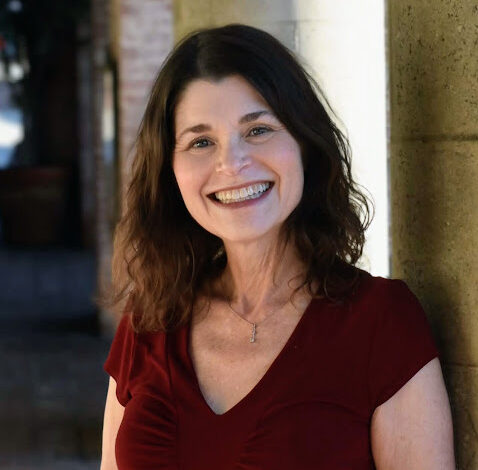
Dr. Michelle Finkel

Dr. Finkel is a graduate of Stanford University and Harvard Medical School. On completing her residency at Harvard, she was asked to stay on as faculty at Harvard Medical School and spent five years teaching at the world-renowned Massachusetts General Hospital. She was appointed to the Assistant Residency Director position for the Harvard Affiliated Emergency Medicine Residency where she reviewed countless applications, personal statements and resumes. Read more

Receive FREE Insider Medical Admissions Tips.

Listen to Dr. Finkel’s interview on the White Coat Investor podcast:

Listen to Dr. Finkel’s interview on the FeminEm podcast: