
Blog Archives

Finding – and Redefining – Balance: It’s Not about Better Multitasking

This time of year, when residency and medical school interview processes are revving up, many of us feel overwhelmed. Here’s a brief but thoughtful piece I’ve saved over the years; it’s about balance. As you consider your future career choices, it’s worth thinking about issues the author covers like clarifying what brings you joy, considering your goals while understanding they will change, and defining balance for yourself.

In this day and age, one can choose a traditionally tough specialty but work in a practice setting that allows for some autonomy and flexibility. But you need to know what you want, and you need to give yourself the room to explore those goals in order to guide yourself in the right direction.

Tags: , , ,

How to Turn Bad Advice on its Head

As you get to know different institutions during this interview season, I encourage you to take the opportunity to reflect and consider what will make you happy in the upcoming years.

When I was a medical student applying for emergency medicine residency programs, a well-meaning dean gave me some bad advice: After interviewing at several institutions, I was determining the order of my rank list and was particularly concerned about one program that had an excellent reputation but was in a city I didn’t like. The dean told me, “You’ll be so busy during residency it won’t matter where you live.” Luckily, the advice rubbed me the wrong way, and I wholeheartedly disregarded it. Where you live for your medical training – medical school, residency, or fellowship – is as important as the quality of your training program! The reasons are several-fold:

  1. Medical training is time-consuming, and you want to be in a city you can enjoy fully when you have a few moments to blow off steam.
  2. Medical training is stressful, and you want to be in a city where you have social support.
  3. Medical training is not completed in a vacuum. Your personal life continues. If you’re single you may meet someone and end up staying in the city where you have trained for the rest of your life. If you’re in a long-term relationship you may decide to have children or may already have them. Down the road you may not want to relocate your family.

Not everyone gets the opportunity to go to medical school or train in residency and fellowship programs in a city s/he likes. But you can make choices that will increase your chances. Consider these options – and your happiness – as you make professional decisions this interview season and in the coming year.

Tags: , , ,

Residency and Medical School Interview Questions: How to Answer that Icky Decade One

“Where do you see yourself in 10 years?” the interviewer asks you, and you squirm…

A physician-administrator once complained to me that whenever he asked potential new faculty hires where they saw themselves in a decade they always said they were interested in global health or teaching. “Most of them have nothing in their CVs to support their interest in international work or education,” he remarked. “They just say it because it’s sexy.”

When asked where you see yourself in ten years, consider how you might demonstrate a clear trajectory. Throwing out activities just because they sound appealing doesn’t make you look professional or your candidacy seem well-synthesized. The idea is to have a path you can back up, defend, and easily justify. This doesn’t mean you’re stuck with what you’ve done even if you didn’t like it. You could point out that having tried myocardial bench research, you realize that your real interest is in clinical investigations of new cardiac markers.

Many medical school applicants say they don’t know what field they want to go into. Of course not! And many residency applicants don’t know if they want to do a fellowship. That’s okay. Again, the point is to focus on your previous strengths and achievements and leverage them.

Contact me for help with tough interview questions. (If you’re planning to seek mock interview help from me, please do it now. I’m booking several weeks in advance.)

Tags: , , ,

We Need to Decrease the Stress and Inefficiencies Associated with the Residency Application Process

Inefficiencies in the residency application system have been a problem for many years. While the AAMC and NRMP have made efforts to improve the process, including the move from the Scramble to SOAP a few years back, the lack of adequate slots for a large number of candidates leads to a tremendous amount of unnecessary stress and waste. With the introduction of virtual interviews, hoarding became a new problem.

To their credit, the AAMC is considering some reforms to the system. Allowing applicants to identify favored residency programs, called “preference signaling” through the supplemental ERAS, for example, has improved candidates’ abilities to get interviews at chosen programs. Additionally, some specialties – with AAMC’s support – have implemented a common interview invitation release date and a minimum response time for invitees. In the latter case, for example, most surgery programs provide candidates a minimum of 48 hours to accept or reject an invitation, such that applicants don’t need to sleep with one eye open, jumping to respond to an invitation to avoid the wait list. There has even been a consideration of capping the number of interviews each applicant can have to avoid interview hoarding.

I recommend reading this piece on proposed reforms to the system. Having gone through the stressful process myself, I wholly support strategies that would increase transparency and decrease unnecessary anxiety. 

Tags: , , ,

Medical and Dental School Interviews: Preparing for your MMI

While the majority of medical school interviews are traditional, some institutions (including dental schools) are using the MMI platform. The MMI (multiple mini interview) is a format that uses several timed stations (yes, even virtually) to assess applicants’ interpersonal skills and judgement. A few things to note about MMI interview questions:

1) They are not always medically-related. You may be asked to manage an everyday problem (e.g. a disagreement at the supermarket).

2) They are not always situational. You need to be prepared for conventional questions too (e.g. what are your three greatest strengths?).

3) Schools are trying to assess whether you can skillfully employ important techniques and demonstrate professionalism. Underlying topics might include your ability to offer effective counseling, your understanding of patient-doctor confidentiality, your ability to diffuse a heated situation, or your capacity to admit wrongdoing, etc.

4) Make sure you know what structure the school is using and employ the right mindset: Working with an actor is different from executing a group project, which is, in turn, different from answering questions about your opinions. 

5) Practice MMI questions before you “go” to your interview. Even if you have excellent social skills, there are techniques you should hone to expertly manage the challenging MMI format. Contact me for help.

Tags: , , ,

About Dr. Michelle Finkel

Dr. Michelle Finkel

Dr. Finkel is a graduate of Stanford University and Harvard Medical School. On completing her residency at Harvard, she was asked to stay on as faculty at Harvard Medical School and spent five years teaching at the world-renowned Massachusetts General Hospital. She was appointed to the Assistant Residency Director position for the Harvard Affiliated Emergency Medicine Residency where she reviewed countless applications, personal statements and resumes. Read more

Receive FREE Insider Medical Admissions Tips.

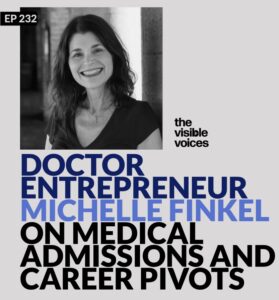
Listen to Dr. Finkel’s interview on The Visible Voices podcast: 


Listen to Dr. Finkel’s interview on the White Coat Investor podcast:

Listen to Dr. Finkel’s interview on the FeminEm podcast: