Blog Archives

Applying in Two Specialties

Occasionally I help residency applicants who are applying in two specialties. This tactic can be strategic in specific scenarios, but it also makes the process more complicated. Here are some quick clarifications to help:

1) Different personal statements can be assigned to different programs. This means you can assign your ob/gyn essay to ob/gyn programs and your internal medicine essay to internal medicine residencies. Of course, in this case, you need to have two versions of your statement in the first place.

2) Different letters of recommendation can be assigned to different residency programs as well. (A maximum of four letters may be assigned to each program.) You’ll either need to have letter writers for different fields, letter writers who will craft two types of letters, generic letters (less compelling), or a mix of these approaches. 

3) You will have only one MyEras application. It will go to all of your programs. Note that if you list your membership in multiple ob/gyn organizations, for example, that will be viewed by your internal medicine readers as well – and might make them question your commitment to IM.

As always, contact me for help. 

Tags: , , ,

Five ERAS Platform Quirks to Heed

On September 1, ERAS will open for submission, so it’s time to get moving on your written materials. Let’s briefly cover five quirks of the ERAS platform to help you get through the drafting process. The ERAS platform…

1) Does not support italics. While journal articles and some phrases (e.g. “summa cum laude”) should be italicized, don’t be surprised when you can’t.
2) Prompts you for a supervisor for each activity. In some cases, you simply may not have one, but whenever you can, name someone. A name validates the experience.
3) Prompts you for average hours per week for each activity. It can be difficult to calculate this number for certain experiences, especially those that are intermittent, but it’s worth making your best estimate rather than leaving the question blank.
4) Offers space to include a “reason for leaving” for each activity. Don’t skip this section, but keep your answers brief.
5) Limits you to 1020 characters for experiences, 510 for the interruption in the medical training section, and 510 for each of the awards sections. Be aware of these limits as you write, so you are not furiously cutting later.  

For tips on how to craft your ERAS, check out these 15 ERAS tips.

Contact me for help with this weird, wild process.


Now That You’ve Gotten an Acceptance to Medical School…

Congratulations to all of my clients who will be starting medical school soon. This is a tremendous achievement. For those who hope to matriculate in the next year or two, I might recommend this Varsity Tutors piece that I wrote several years ago and the follow-up article. The “medical school paradox” is a tough one to crack, but if you prepare in advance, you’ll have an excellent head start and a professional advantage.

Tags: , , ,

Something You Probably Haven’t Considered Could Have a Huge Impact on Your Professional Happiness

A recent article in Emergency Medicine News caught my eye. Emergency physician Dr. Tom Belanger conducted a small study (n=573) in which he crafted a nine-question Likert scale survey and then attempted to predict emergency physicians’ employment structures based on respondents’ answers. He used statements like “I am paid fairly,” “I am secure in my career,” and “Emergency medicine is a good career” in his survey.

In medical school and residency, I thought little about employment structure, which can include democratic, hospital employee, contract management, independent or locums, academic, resident, or government systems. As a student, I was so focused on what specialty I would choose and was so influenced by the academicians I worked with that I didn’t even consider that I could choose a field in which I might be happy in one employment structure and discontent in another. 

Belanger found that employees of contract management groups (CMGs) tended to be the most negative respondents, and owners of CMGs were not far behind. On the other hand, owners of democratic groups were the most positive in almost every aspect. 

In this study, all respondents were in the same specialty and yet, employment structure divided respondents with regard to their career satisfaction. Belanger’s graphs are worth viewing in his piece, but the take-home point for medical students and residents is the importance of the employment structure in which you ultimately work, a topic that may not have even crossed your mind until now. 

Tags: , , ,

Inaccuracies in Medical Student Grades Translate into a Residency Application Strategy

Here’s an oldie-but-goodie New York Times piece by Dr. Pauline Chen on medical student grades. In reading the article, residency applicants should reflect on how important the content of their letters of recommendation is, especially in the setting of medical school grades that may be inflated or simply inaccurate. The 2020 NRMP Program Director Survey supports the importance of letters, as well, with statistics. Make sure your letters are very strong; remember that mediocre letters should not be a part of your residency package.

Tags: , , ,

About Dr. Michelle Finkel

Dr. Michelle Finkel

Dr. Finkel is a graduate of Stanford University and Harvard Medical School. On completing her residency at Harvard, she was asked to stay on as faculty at Harvard Medical School and spent five years teaching at the world-renowned Massachusetts General Hospital. She was appointed to the Assistant Residency Director position for the Harvard Affiliated Emergency Medicine Residency where she reviewed countless applications, personal statements and resumes. Read more

Receive FREE Insider Medical Admissions Tips.

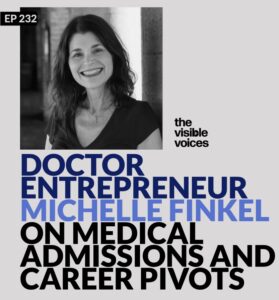
Listen to Dr. Finkel’s interview on The Visible Voices podcast: 


Listen to Dr. Finkel’s interview on the White Coat Investor podcast:

Listen to Dr. Finkel’s interview on the FeminEm podcast: