Blog Archives

Check out these Medically-Related Podcasts

Creepy, but juicy. That’s how I’d describe a podcast I just finished called The Shrink Next Door. It’s a fascinating series reported by Joe Nocera (of New York Times fame) about an East Coast academic psychiatrist who manipulates at least one patient into sacrificing control of his finances, social connections, and business for decades. For medical folks like us, it brings up monumental issues of professionalism, ethics, and oversight.

Another one to listen to (but be prepared for nightmares) is Believed. This podcast chronicles Larry Nassar’s decades of sexual abuse of patients within and beyond his role as the USA Gymnastic national team doctor. It’s a chilling description of how even well-meaning adults can have blinders on when it comes to a physician, based on his perceived social status. 

And please feel free to listen to my guest spots on the White Coat Investor Podcast, the FeminEm Podcast, and the Hippocratic Hustle Podcast, although they are admittedly less captivating than The Shrink and Believed :). Use the links included in this entry or download them directly from your favorite podcast app.
Tags: ,

Medical School Interviews: How to Strategically Confront and Address Weaknesses

Not everyone has a 3.99 BCPM or a 99th percentile on her MCAT. In my recently-published Student Doctor Network article, you’ll learn how to acknowledge your candidacy’s deficiencies, while providing persuasive evidence that you’ve overcome obstacles. These techniques work well for residency and fellowship interviews also. 

Tags: , , ,

Four Ways to Save $ in the Medical School and Residency Interview Processes

1. If you are ambivalent about an institution, schedule your interview later. By late-season you may decide not to interview there at all, saving you some money.

2. Group your interviews geographically. If you think this is impossible, consider this: There is nothing wrong with calling an institution you are waiting to hear from and politely letting the assistant know you have been invited to interview at a nearby school/program. Let him/her know you would like to save money by flying out to the area once, and ask if the admissions committee/ residency might be willing to let you know now if the institution will be offering you an interview. Believe it or not, this technique sometimes works.

3. Check out travel web sites daily or better yet, set an alert on Kayak, Hopper, or Google flights. Occasionally, a low price is available only if you catch it quickly.

4. Consider staying with students/residents if the institution offers. Hotels can be expensive, and sometimes you can gather useful information about the school/program this way. Just beware that anything you do or say may be repeated to the admissions committee/residency. (Make sure to write a thank you note.)

Tags: , , ,

How the Show ER and New Residency Programs Change the Economy of a Specialty

Here’s an interesting piece called “Are There Too Many Emergency Physicians?” by Thomas Cook MD, an emergency medicine program director. Dr. Cook chronicles the growth of emergency medicine residency positions from a total of 1821 in 2015 to 2488 in 2019. This rapid growth in the field may lead to an oversupply of emergency physicians.

The paradox here is that only recently there was a shortage of emergency physicians. And back when I graduated from medical school in the mid-1990s, almost no one was applying for emergency medicine. In my class of around 150 students, there were three of us. As the popularity of the show “ER” waxed, the number of applicants to the field swelled. Then, years later, the field contracted again. 

Other fields have also recently seen a boom in the number of residency spots, including family medicine, psychiatry, and anesthesiology. Of course, opening up more residency positions is a good thing for medical students (especially international medical graduates) and patients, but the growth in certain fields may lead to a change in the economy of those specialties. It will be an interesting experiment.

Tags: , , ,

Mom and Dad May Think You Have Good People Skills, But That’s Not Enough When It Comes to Interviews

Every year I am hired by re-applicants for medical school and residency who tell me that the year before they received multiple interview invitations, thought they performed well on interview day, but then were left with no offers in the spring. 

This is the truth: Interviews are hard. You need to strategically respond to criticisms of your candidacy, showcase the strengths of your application, be prepared for awkward or even – sometimes – illegal questions, all while seeming fresh and enthusiastic.

There are applicants who spend months studying for their MCAT or Boards, but don’t spend even an hour practicing for their interviews. It’s a naive disconnect. 

If you can mock interview with someone who has been on a medical school admissions committee for years or a faculty member who has strong experience with residency applications, go for it. If not, check out my mock interview services here. Don’t rely on a friend or family member with no experience.

Here is a funny, less-than-one-minute, stop-motion video to guide you on this topic. 

Tags: , , ,

About Dr. Michelle Finkel

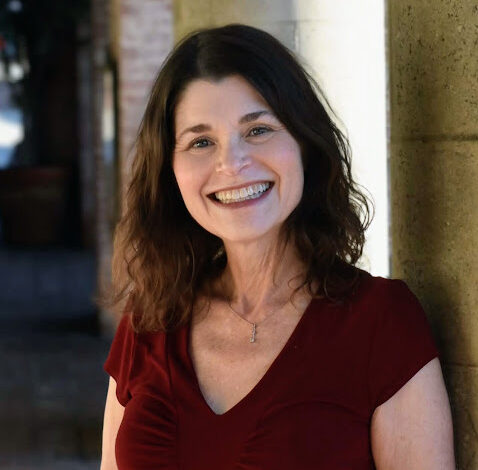
Dr. Michelle Finkel

Dr. Finkel is a graduate of Stanford University and Harvard Medical School. On completing her residency at Harvard, she was asked to stay on as faculty at Harvard Medical School and spent five years teaching at the world-renowned Massachusetts General Hospital. She was appointed to the Assistant Residency Director position for the Harvard Affiliated Emergency Medicine Residency where she reviewed countless applications, personal statements and resumes. Read more

Receive FREE Insider Medical Admissions Tips.

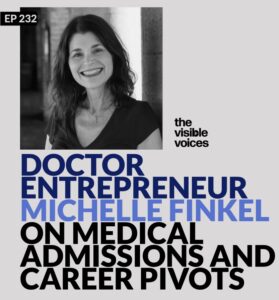
Listen to Dr. Finkel’s interview on The Visible Voices podcast: 


Listen to Dr. Finkel’s interview on the White Coat Investor podcast:

Listen to Dr. Finkel’s interview on the FeminEm podcast: