Blog Archives

The Week I Spent 138 Hours in the Hospital

During my internship, on my surgical rotation, I once spent 138 hours in the hospital in one week. If you think this isn’t mathematically possible, I will tell you that I was on call from Monday morning to Tuesday evening, from Wednesday morning to Thursday evening, in-house on Friday, and then on call from Saturday morning until the next Monday morning. (I had to stay in-house that Monday until evening rounds were over too.) As you can imagine, I was barely human by the end. How this schedule was good for patient care is beyond me.

I thought of that ghastly time recently when reading this article in the New York Times called “How Job Stress Can Age Us” written by Dr. Dhruv Khullar. The author reports on a study, “Physician-Training Stress and Accelerated Cellular Aging” that assessed the DNA of 250 first-year medical residents around the country. Researchers examined the saliva samples of these residents, focusing on their telomeres – the bumpers at chromosome ends that prevent DNA damage – before and after the first year of residency. Researchers found that the DNA of first-year residents aged six times faster than normal.

Six times faster.

I found this both shocking, upsetting, and validating. Residency training is as hard as we think it is. 

What I would strongly recommend is that you compare residency programs’ hours before you create your Match list. Strangely, many applicants don’t even consider this important issue when making decisions about their next three to five years. Also, many residencies support physician wellness programs and night coverage. Especially in the setting of severe burnout among doctors, your happiness should be a primary factor in your career choices. If you’re not sure, consider your shrinking telomeres. 

Tags: , , ,

Managing Difficult Medical School Interview Questions: Rehearse Your Elevator Pitch Now

An important key to preparing for tough medical school interview questions is realizing that a) interviewing is a skill and b) practice improves performance. Every year too many medical school (and residency, fellowship, and dental school) candidates expend tremendous energy assembling fantastic applications, only to undermine their chances by approaching the interview with twisted laws of entropy and enthalpy: They prepare for it with maximum randomness and minimum energy.

Once you’ve done adequate groundwork, the medical school interview represents your opportunity to distinguish yourself and impress your interviewers as the type of candidate they’d love to have at their institution.

That’s not to say every interview will be full of hugs and puppy kisses. Like the story of the interviewer whose window was nailed shut, there may be uncomfortable moments and even illegal questions. With a bit of preparation, you can learn to hit these curveball questions out of the park. Let’s explore an example that has come up in the not-so-distant past.

Rehearse Your Elevator Pitch

While most interviewers take the time to read your application materials in advance, don’t be offended by the faculty member who did not prepare, is blankly flipping through your application right there in front of you, and who asks open-ended (and dreaded) medical school interview questions, such as “Tell me about yourself” to be brought up to speed. View it this way: These faculty members are offering you the opportunity to define how you’d like to be remembered.

Your goal should be twofold: 1) to persuade them how much you’d add to their institution and 2) to make their job easier by giving them the bullet points they’ll need to persuade their peers about your candidacy’s worthiness. When your interviewer sits around a table advocating on your behalf, steer her to use terms that will be germane to your candidacy. Are you the, “global health advocate who volunteered with Mother Teresa and ran his school’s homeless food program?” Or perhaps you are the “first generation college graduate who held premier leadership positions in medical school?” Help your interviewer help you.

In the end, difficult interview questions are less intimidating if you both prepare well and have an attitude that they are an opportunity to clarify and further your candidacy. For help, secure your Mock Interview slot with me. I’m booking a few weeks in advance, so sooner is better than later.

Tags: , , , ,

“Unhappy is He Who Depends on Success to be Happy” – Alex Dias Ribeiro, Former Formula 1 Race Car Driver

Age-related professional decline is the last thing many doctors want to think about. Those who have just finished years of arduous training can’t imagine that they have only 15 years until they will deteriorate (statistically true), and those of us in middle age don’t want to think about our impending, cognitive retreat from medicine. And yet, this fantastic piece in the Atlantic “Your Professional Decline is Coming (Much) Sooner than You Think” by Arthur C. Brooks is a fascinating, well written article about happiness, gifted and accomplished people, and personal relevance with multiple interesting celebrity examples. Brooks also proposes some quasi-solutions (or at least some work-arounds). I strongly recommend this compelling piece for physicians of all ages and stages.

Tags: , , ,

Are you a Residency Candidate Applying in More than One Specialty? Read this.

If you’re planning to apply in more than one field, you have a challenging road ahead of you, and you should strategize accordingly. Remember that, although your ERAS activities cannot be individualized to different residency programs, your personal statement and letters of recommendation can. Demonstrating commitment to each field through your essay and letters will be a challenge, so take time to write thoughtfully, and make sure you speak candidly to your faculty recommenders.

Above all: Ensure that you assign the correct specialty-specific documents to the correct programs!

Tags: , ,

Be an Adult: Don’t Accept Helicopter Parenting

Check out this hilarious (and sad) piece in the New York Times about helicopter parenting and note that two of the anecdotes are physician related. (Can you imagine interviewing for an attending position with your dad present?)

My policy at Insider is to work exclusively with applicants (not parents or spouses) to maintain confidentiality, avoid redundancy, and ensure candidates assume primary responsibility for their work. It’s a winning strategy.

Tags: , ,

About Dr. Michelle Finkel

Dr. Michelle Finkel

Dr. Finkel is a graduate of Stanford University and Harvard Medical School. On completing her residency at Harvard, she was asked to stay on as faculty at Harvard Medical School and spent five years teaching at the world-renowned Massachusetts General Hospital. She was appointed to the Assistant Residency Director position for the Harvard Affiliated Emergency Medicine Residency where she reviewed countless applications, personal statements and resumes. Read more

Receive FREE Insider Medical Admissions Tips.

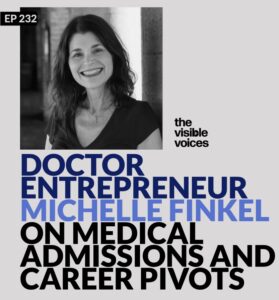
Listen to Dr. Finkel’s interview on The Visible Voices podcast: 


Listen to Dr. Finkel’s interview on the White Coat Investor podcast:

Listen to Dr. Finkel’s interview on the FeminEm podcast: