Blog Archives

Is Step 1 Still on Track to Go Pass/Fail?

Earlier this year, United States Medical Licensing Exam (USMLE) administrators announced that, after a long process of consideration, Step 1 would be scored as pass/fail going forward. With the global pandemic and many systems in disarray, some students had been concerned that the plans might be delayed, but according to the USMLE, the transition to Step 1 pass/fail score reporting is on track to be implemented in January 2022. The USMLE is also considering some changes to Step 2CS, although the details of those modifications are not yet available to the general public. 

Check out this piece about the details of the Step 1 scoring change.

Tags: , , ,

Post-ERAS, Pre-Interview Supplemental Questions

Several residency applicants have told me that since they submitted their ERASes, some programs have asked them to answer additional, written questions like “Why our program?” and “How will you bring diversity to our institution?” The additional workload seems burdensome, especially this year, but I suspect residency directors are concerned about interview hoarding – since sessions will be virtual and thus easier to accept and attend – and are trying to weed out applicants accordingly. 

Although originally written for medical school candidates, see my blog entry here to help with the “Why our program?” question and here to help with the diversity prompt. 

Remember: This is a marathon, not a sprint. 

Tags: , , ,

Wednesday is Only Two Days Away, Which Means the ERAS Open Date is Fast Approaching

Residency applicants, this is a reminder that this Wednesday, October 21 at 9am EST is when programs can begin reviewing applications. ERASes submitted today through Wednesday will still display an application date of October 21 so ensure your ERAS experience section and personal statement are in tip top shape and then, simply submit by Wednesday. (Applications submitted after that day will be date-stamped in real-time.) For help, check out “15 ERAS Tips to Boost Your Residency Application” and “5 ERAS Platform Quirks to Heed.” Then get your ERAS in and take a well-deserved break. 

Tags: , , ,

Residency Personal Statement Tips

I’ve received questions recently about the residency personal statement, so I’m including some articles and blog posts that might be useful:

  • For an overall approach to the personal statement, check out this article.
  • Is Your Personal Statement a Little Too Personal? is a fun, pointed piece by guest blogger David Presser MD, MPH.
  • Should you be a creative nonconformist when writing your personal statement? Find out here
  • Examples of outstanding essay intros (from Stanford undergraduate applicants) are here.

And as always, contact me for help.

Tags: , , ,

15 ERAS Tips to Boost your Residency Candidacy

I’ve started editing ERASes this cycle and have developed this list for guidance:

1. Include relevant pre-professional accomplishments from college. If you conducted research, for example, list and describe it. Do not include high school achievements unless they were truly unique (worked at the White House, sang on Broadway, published in Nature).

2. While you want to include many strong achievements, you do not want your ERAS to be so long that your reader is tempted to skim it, so avoid small activities (like an afternoon health fair). 

3. Keep your descriptors to approximately five to seven sentences. Fewer can look lazy and more can look self-indulgent.

4. Use full sentences. It’s a formal application, and you want to make your written materials as readable as possible.

5. Avoid abbreviations. Ones you think are common might not be familiar to the reader.

6. Avoid contractions; they are too informal for your ERAS. 

7. Make sure you spell out your accomplishments clearly. If your reader doesn’t understand an activity, you won’t get “full credit” for what you’ve done. Make no assumptions – not even that the reader has reviewed the experience’s introductory information (location, name of activity). 

8. Write about yourself and your role – not an organization. For example, don’t use the space to discuss Physicians without Borders. Use it to discuss the specifics of your role at Physicians without Borders.

9. Use numbers to be persuasive. Saying that the conference you organized had 300 participants says it all.

10. Unless your PI won the Nobel, avoid using supervisors’ and/or doctors’ names in your descriptors as they will be meaningless to the majority of your readers.

11. Do your best not to leave the “Medical School Awards” section blank. Even if you have to simply include clerkships in which you obtained honors (or high honors), fill that section out.

12. If you have not already, consider joining your specialty’s national organization and listing it under the “Membership in Honorary/Professional Societies” section. If you are applying in two fields, take this advice, though.

13. Try to end your entries with a sentence about how the experience you just described will help you as a future specialist. Making that connection for the reader furthers your candidacy. 

14. As with all good writing, avoid redundant language. Having the word “research” three times in two lines is distracting and demonstrates a lack of originality. 

15. Get help. Don’t submit your residency application without having it reviewed by someone with a lot of experience. You do not want to put forward suboptimal materials for a process that is this important and competitive.

Tags: , , ,

About Dr. Michelle Finkel

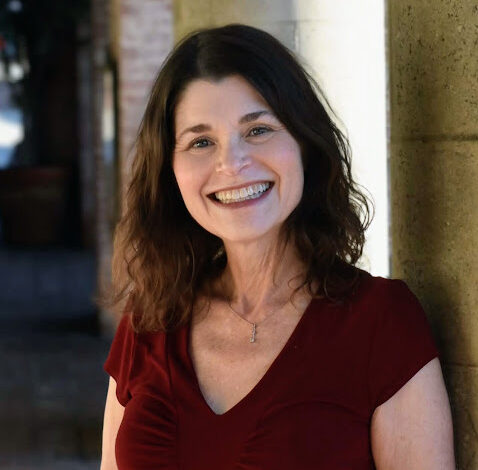
Dr. Michelle Finkel

Dr. Finkel is a graduate of Stanford University and Harvard Medical School. On completing her residency at Harvard, she was asked to stay on as faculty at Harvard Medical School and spent five years teaching at the world-renowned Massachusetts General Hospital. She was appointed to the Assistant Residency Director position for the Harvard Affiliated Emergency Medicine Residency where she reviewed countless applications, personal statements and resumes. Read more

Receive FREE Insider Medical Admissions Tips.

Listen to Dr. Finkel’s interview on the White Coat Investor podcast:

Listen to Dr. Finkel’s interview on the FeminEm podcast: