
15 ERAS Tips to Boost your Residency Candidacy

I’ve started editing ERASes this cycle and have developed this list for guidance:

1. Include relevant pre-professional accomplishments from college. If you conducted research, for example, list and describe it. Do not include high school achievements unless they were truly unique (worked at the White House, sang on Broadway, published in Nature).

2. While you want to include many strong achievements, you do not want your ERAS to be so long that your reader is tempted to skim it, so avoid small activities (like an afternoon health fair). 

3. Keep your descriptors to approximately five to seven sentences. Fewer can look lazy and more can look self-indulgent.

4. Use full sentences. It’s a formal application, and you want to make your written materials as readable as possible.

5. Avoid abbreviations. Ones you think are common might not be familiar to the reader.

6. Avoid contractions; they are too informal for your ERAS. 

7. Make sure you spell out your accomplishments clearly. If your reader doesn’t understand an activity, you won’t get “full credit” for what you’ve done. Make no assumptions – not even that the reader has reviewed the experience’s introductory information (location, name of activity). 

8. Write about yourself and your role – not an organization. For example, don’t use the space to discuss Physicians without Borders. Use it to discuss the specifics of your role at Physicians without Borders.

9. Use numbers to be persuasive. Saying that the conference you organized had 300 participants says it all.

10. Unless your PI won the Nobel, avoid using supervisors’ and/or doctors’ names in your descriptors as they will be meaningless to the majority of your readers.

11. Do your best not to leave the “Medical School Awards” section blank. Even if you have to simply include clerkships in which you obtained honors (or high honors), fill that section out.

12. If you have not already, consider joining your specialty’s national organization and listing it under the “Membership in Honorary/Professional Societies” section. If you are applying in two fields, take this advice, though.

13. Try to end your entries with a sentence about how the experience you just described will help you as a future specialist. Making that connection for the reader furthers your candidacy. 

14. As with all good writing, avoid redundant language. Having the word “research” three times in two lines is distracting and demonstrates a lack of originality. 

15. Get help. Don’t submit your residency application without having it reviewed by someone with a lot of experience. You do not want to put forward suboptimal materials for a process that is this important and competitive.
Tags: , , ,

No, I Can’t Fix Your Computer

My husband spotted a man wearing a t-shirt with that saying on it, and we have ever since jokingly referred to it when someone in the house is having a tech problem. 

As we all probably know, there is usually someone in the extended family who is the “computer person.” 

Well, we could use that individual now. While I am a big fan of the virtual interview for medical school and residency (see my upcoming Doximity article on the topic), I do worry about technical glitches. A client recently wrote me that her asynchronous, recorded virtual medical school interview had a problem, leaving her with one question unanswerable. (I counseled her to inform the school.) I’m crossing my fingers that this is an anomaly and not a reflection of what’s to come this cycle.

As always, make sure to practice for your interviews; you wouldn’t go into a standardized test without a lot of preparation, and the same should be true for interviews. 

Contact me here for help. 

Tags: , , ,

The Virtual Medical School Interview: What to Expect when You’re Expecting… An Unconventional Format

In the late spring, to its credit, the Association of American Medical Colleges® (AAMC) recommended that all medical school, residency, and fellowship interviews be done virtually this cycle. Formats may vary, but interviews should not be in-person.

One configuration that seems to be emerging for medical schools (at least) is a two-part model: asynchronous and synchronous. The former involves a recorded session in which a computer platform – without a live interviewer present – provides questions to applicants who then have a set time to record their answers. The synchronous session is a live, remote interview.

The advantage of virtual interviews – beyond obvious health benefits and cost containment – is a standardization of the process, but mastering the new, remote processes may be difficult and anxiety-producing. 

To get help with this new world of virtual interviews, contact me

Tags: , , ,

Applying in Two Specialties

Most residency candidates know that their lives will be made easier if they apply in only one specialty, but some apply to a competitive field with a backup, and others are still deciding between two at the time of ERAS submission.

Here are some clarifications about what ERAS offers that will help you apply in two specialties:

1) Different personal statements can be assigned to different programs. This means you can assign your ob/gyn essay to ob/gyn programs and your internal medicine (IM) statement to IM residencies.
2) Different letters of recommendation (LORs) can be assigned to different residency programs as well. (A maximum of four letters may be assigned to each program.)

You will have only one MyERAS application. It will go to all of your programs. (Note that if you list your membership in multiple ob/gyn organizations, that will be viewed by your IM readers as well and might make them question your commitment to IM.)

If you are thinking of applying in three specialties, I’d say don’t. Navigating the application and interview process while showing commitment to each field could be miserable. If you’re at three, take a moment for some reflection, and pare your list to one or two.

Tags: , , ,

How the New ERAS Schedule Might Relieve Your Stress

This year, in light of the COVID crisis, while ERAS will open on September 1, residency programs will not have access to applications until October 21, which is more than a month later than last year’s date of September 15. At first glance, this alteration might seem minor: After all, if programs download applications in batches by chronological order, an applicant would still be better off submitting on September 1. However, all applications submitted September 1 through October 21 will appear to programs as being submitted on October 21. This affords residency applicants more time to get their applications in order. 

Having said that, ECFMG is still recommending that applicants submit by October 14 to be on the safe side, and I’d also suggest not waiting until the last minute. Good writing takes a long time, and you do not want to be behind the eight ball, submitting suboptimal written materials. 

For help with your residency written materialscontact me

Tags: , , ,

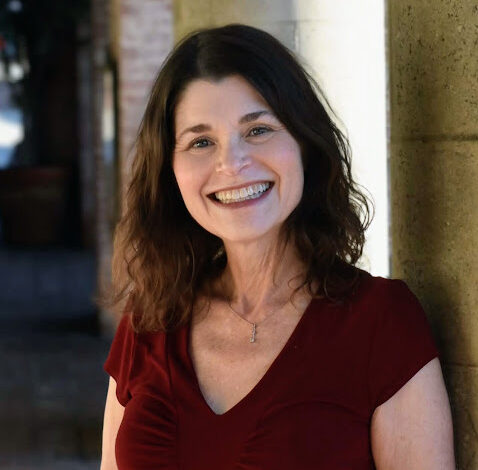
About Dr. Michelle Finkel

Dr. Michelle Finkel

Dr. Finkel is a graduate of Stanford University and Harvard Medical School. On completing her residency at Harvard, she was asked to stay on as faculty at Harvard Medical School and spent five years teaching at the world-renowned Massachusetts General Hospital. She was appointed to the Assistant Residency Director position for the Harvard Affiliated Emergency Medicine Residency where she reviewed countless applications, personal statements and resumes. Read more

Receive FREE Insider Medical Admissions Tips.

Listen to Dr. Finkel’s interview on The Visible Voices podcast: 


Listen to Dr. Finkel’s interview on the White Coat Investor podcast:

Listen to Dr. Finkel’s interview on the FeminEm podcast: