“Why Our School” Secondary Essay: How to Get Started

Secondary essay prompts vary, but there are a few that are standard fare. See my recent blog entry for guidance on the familiar “diversity essay.” “Why do you want to attend our school?” is also a common topic pre-meds will encounter.

Medical school admissions officers want to be assured that you know their institution, are seriously considering it, and will fit in well there. In approaching the “why-our-school” question, do your research on the institution and link something specific about you with the school’s philosophy, curriculum, patient population, and/or extracurricular programs.

For instance, if you were a teaching assistant for chemistry in college, you might link your use of the Socratic method with a school’s tutorial-based learning. In that way, you demonstrate knowledge of the school, show that you connect well with it, and showcase your accomplishment.  

The paradox here is that – although you are theoretically focusing your essay on one school – because so many institutions have overlapping philosophies, curricula, and objectives – you can oftentimes use the same essay framework for many different schools. 

That’s one strategic way to cut down the overwhelming workload that secondary applications present. 

Tags: , , ,

AAMC Fee Assistance Program Expands

In light of the COVID crisis, the AAMC has recently expanded its Fee Assistance Program income eligibility. Please take a look here for current requirements. For more information on the FAP, including an online webinar, see this AAMC page.  

To support those with financial need, l continue to offer a discount to those applicants who can demonstrate a current FAP. Contact me with questions. 

Tags: , , ,

Diversity Essay: How to Get Started

I’ve had several questions on how to approach the secondary essay diversity prompt. In considering your strategy and content, I’d recommend you ask yourself the following question: 

What ethnic, religious, racial, gender, language, socioeconomic, or sexual orientation aspects of me, my family, or my experience make me distinctive?

Please note that experience is part of the question I have posed. An applicant I mentored a few years back wrote me concerned that she did not fit into a minority category and thus, could not answer the prompt effectively. I suggested she consider an experience that targeted the prompt’s theme, and she wrote a strong essay about her successful efforts to increase diversity during sorority rush. I crafted one of my secondary essays on my experience hearing Spike Lee speak in person. Don’t be afraid to think outside the box.


How to Get Clinical Experience Safely During the COVID Pandemic

I’ve written before about the importance of premeds’ getting clinical experience. Not only is robust clinical participation critical to obtaining a medical school acceptance, it’s also important to ensure you like working with patients before heading down the long medical training path. 

During this pandemic, working as an EMT, scribe, or certified phlebotomist can be risky. So how can you get clinical experience without being in the clinic?

Here are three ideas:

  1. Become a contact tracer –  I tweeted last month about a great Johns Hopkins training opportunity. Working as a contact tracer is a way to do a good deed, learn to convey difficult information to lay people, and make some money. 
  2. Work on a crisis hotline (phone or text) – Many people are, understandably, in distress right now, and learning to assist those having emotional challenges will help you as a future physician.
  3. Work on a COVID information hotline – There is a lot of misinformation floating about. Conveying accurate scientific concepts to the public is, again, an excellent skill to have in your tool box as a future doctor. 

Check out my goofy, less-than-one-minute video about the importance of getting clinical experience here


Brevity is the Soul of Wit

As William Shakespeare so wisely pointed out, being concise is critical for good writing.

I’ve been editing a lot of personal statements over the last few months, and I deliberately recommend a word count of 750 or fewer for my advisees for a couple of reasons:

First, I’ve found that that number is just the right balance of content and streamlining: Over 750 words for an admissions essay lends itself to meandering writing.

Second, your reader is likely reviewing tens or even scores of applications in a short period of time. S/he is looking to spend as little time as possible on your written materials, while still getting a good flavor for your candidacy. Don’t burden your reader with verbiage.

Having trouble being brief? Here’s a helpful trick: Imagine AMCAS, AACOMAS, or ERAS is charging you $10 per word. How would you keep costs down?

Tags: , , ,

About Dr. Michelle Finkel

Dr. Michelle Finkel

Dr. Finkel is a graduate of Stanford University and Harvard Medical School. On completing her residency at Harvard, she was asked to stay on as faculty at Harvard Medical School and spent five years teaching at the world-renowned Massachusetts General Hospital. She was appointed to the Assistant Residency Director position for the Harvard Affiliated Emergency Medicine Residency where she reviewed countless applications, personal statements and resumes. Read more

Receive FREE Insider Medical Admissions Tips.

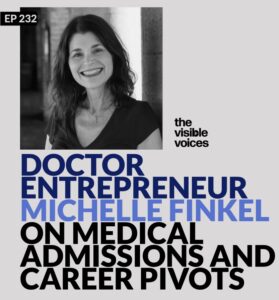
Listen to Dr. Finkel’s interview on The Visible Voices podcast: 


Listen to Dr. Finkel’s interview on the White Coat Investor podcast:

Listen to Dr. Finkel’s interview on the FeminEm podcast: