Blog Archives

Leverage the MSAR for Your Benefit

The Medical School Admission Requirements (MSAR) database is an online resource that allows users to search, sort and compare information about U.S. and Canadian medical schools. (When I was applying in the 90s, the MSAR was a hard copy book.) The 2025 MSAR was just recently published; if you’re applying to medical school, I’d recommend purchasing the current version because it provides so much information about institutions and their admissions statistics. The MSAR allows you to compare schools by median MCAT scores, AMCAS GPAs, and other criteria. (Of course, how institutions utilize the MCAT score is variable, which contributes to the shameful opaqueness of the medical school admissions process.)

You should use the MSAR to help determine which schools are in your range and which are “reach” schools. While it’s okay to have a lot of “reach” schools (if you can afford it), it’s critical to ensure you are applying wisely to schools that match your numbers. The advantage of the MSAR is that you can make evidence-based decisions. I’ve found some applicants have eye-opening experiences when they thoroughly review schools’ statistics and either realize their numbers are on the lower side and that they should apply to schools accordingly or, happily, that they have numbers that match with top schools. Either way, reviewing the data is critical to good decision making.

Tags: , , ,

How To Craft Stand-out Most Meaningful Paragraphs

Back in 2012, seemingly out of the blue, a new component appeared on AMCAS®. Applicants were being asked to identify up to three of their most significant extracurricular experiences and support their selections with more writing. The instructions stated:

This is your opportunity to summarize why you have selected this experience as one of your most meaningful. In your remarks, you might consider the transformative nature of the experience, the impact you made while engaging in the experience and the personal growth you experienced as a result of your participation. 1325 max characters.

Now the Most Meaningful Paragraphs are par for the course, but applicants routinely make a few avoidable errors in crafting them. Here are tips to do your best work:

1) Don’t merge the descriptors with the Most Meaningful Paragraphs; they are separate sections: You can complete descriptors for up to 15 activities with a maximum of 700 characters each, plus up to three Most Meaningful Paragraphs with a maximum of 1325 characters each. The fact that these are two different tasks might seem clear to some, but every year, I receive AMCAS drafts to edit with merged descriptors and Most Meaningful Paragraphs.

2) Don’t use patient anecdotes in your Most Meaningful Paragraphs: Most medical school applicants have patient vignettes to share, which means that a patient story does not distinguish an applicant from the masses of other candidates. Also, these patient stories can sound trite or even inadvertently condescending. Talk about yourself instead. (See below.)

3) Don’t repeat what you’ve written in your descriptor. The Most Meaningful Paragraphs are an opportunity to delve deeper into your achievements. Let’s say you’re showcasing your experience as a teaching assistant (TA) who was promoted to head TA or simply asked to return the next semester. Highlight teaching achievements that propelled you to get the lead position or the return invite. Did you offer an unconventional way of learning the difficult material? If so, what was it? Did you provide service that was above and beyond what was required? If so, what exactly did you do and how did it help your students? Did you get excellent teaching reviews? By delving deeper, you can truly demonstrate the “transformative nature of the experience, the impact you made while engaging in the experience and the personal growth you experienced as a result of your participation.” Make sure you address at least one of the three topics mentioned in the prompt – transformative nature, impact, and/or personal growth – in your Most Meaningful Paragraph.

Bottom line: The Most Meaningful Paragraphs are an opportunity for you to demonstrate your distinctiveness and worthiness for medical school. Write substantively to make sure you don’t waste the opportunity to further your candidacy.

Tags: , , ,

Residency Applicant Characteristics: Key Differences Between Those who are Ranked Highly and Those who Aren’t

The NRMP posted a webinar on applicant characteristics associated with success and failure in the recent Match, specifically focusing on Family Medicine, OB/GYN, Otolaryngology, Pathology, and Diagnostic Radiology.

The webinar presents data tracking trends in whom programs (from those five specialties) ranked. NRMP says they hope to help applicants and residency directors gain a clearer understanding of the factors influencing candidate selection. Some of the data is to be expected (average Step 2 scores are higher for Otolaryngology than for Family Medicine), but there there are more specifics offered: Over three quarters of Otolaryngology programs don’t take applicants with Step 2 scores under 225 whereas half of Family Medicine programs take applicants with Step 2 scores as low as 215. There are some other interesting factoids that might guide candidates’ approach to the Match.

Here’s the YouTube link.

Tags: , , ,

Will Scientific Research Cuts Lead to Increased Medical School Applications?

The AAMC recently posted a piece by Bridget Balch about how rescinded offers and smaller PhD cohorts might have long-term consequences for biomedical science. In addition to withdrawn offers, for some PhD applicants, the research funding chaos has led to increased rejection rates and delayed decisions regarding admissions. Programming for science graduate students from underrepresented minorities has also been hit.

I just heard about an acquaintance’s son who will be changing his plans from getting a PhD to applying to medical school, as he sees being a doctor as a more secure career path. I wonder if an unintended consequence of the cuts in scientific research will mean an increased number of students applying to medical school in the next few cycles. Only time will tell.

Tags: , , ,

Which Specialties are Using ResidencyCAS Instead of ERAS this Cycle?

In place of ERAS, a few specialties will be using ResidencyCAS, another centralized application platform for residency programs. In the past, OB/GYN used the newer service, and this year, emergency medicine will as well. ResidencyCAS promises enhanced features like data analytics, specialty-specific design; a mobile platform; and a single system for applying, scheduling, and completing interviews. 

You can click toward the bottom of the page here for an applicant worksheet PDF both for OB/GYN and for emergency medicine.

Of course, candidates applying to OB/GYN or emergency medicine and a second specialty will still need to complete ERAS.

Tags: , , ,

About Dr. Michelle Finkel

Dr. Michelle Finkel

Dr. Finkel is a graduate of Stanford University and Harvard Medical School. On completing her residency at Harvard, she was asked to stay on as faculty at Harvard Medical School and spent five years teaching at the world-renowned Massachusetts General Hospital. She was appointed to the Assistant Residency Director position for the Harvard Affiliated Emergency Medicine Residency where she reviewed countless applications, personal statements and resumes. Read more

Receive FREE Insider Medical Admissions Tips.

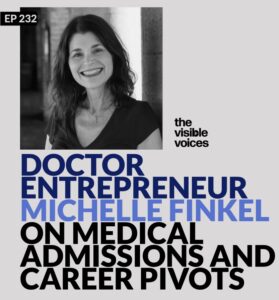
Listen to Dr. Finkel’s interview on The Visible Voices podcast: 


Listen to Dr. Finkel’s interview on the White Coat Investor podcast:

Listen to Dr. Finkel’s interview on the FeminEm podcast: