
Blog Archives

Four Thousand Weeks

I’m currently reading a fantastic nonfiction book called Four Thousand Weeks: Time Management for Mortals by Oliver Burkeman. Four thousand weeks is how much time the average human has on this earth. That doesn’t sound like a lot.

I’d highly recommend the book to those of you who are productivity geeks, folks who are trying to be as efficient as possible with their time – all the time. I’m certainly one of those people.

Unlike other authors, Burkeman recommends that you surrender to the fact that you cannot get everything done and that traditional time management strategies, which are supposed to help you multitask, will fail and cause anxiety. He recommends recognizing that our lives are finite and that we should be in the moment. The author does a fantastic job of persuading even someone like me how important it is to recognize that even if you get your list done, there will always be more items on your next list. 

I’m not much into self-help, but I do recommend this intelligent book.
Tags: , , ,

Important Updates to the Residency ERAS

Other than implementation of the supplemental ERAS for select specialties, the residency ERAS hasn’t had many modifications over the past decade. However, this year the AAMC overhauled the application in several significant, positive ways:

1. In past years applicants could include as many activities as they wanted, which put a big burden on both candidates and faculty readers. Applicants didn’t know if they should include activities as far back as college (or even high school) and were afraid to leave anything out. Faculty were faced with some applications that were excessively long, chocked full of unimportant information or remote accomplishments. 

This year candidates can focus on as many as 10 experience entries – but no more – and can designate three as their most meaningful (like the AMCAS) with a short, additional description for each. 

2. Applicants will also be able to choose from more “experience types” than they had in past years and will be asked to provide more descriptive information about their activities. 

3. Candidates will have the opportunity to complete an “impactful experiences” section where they can describe any hardships (family, financial, education, etc.).

4. Applicants can communicate their preference for a particular geographic division or for a rural versus urban setting.

5. Candidates applying to specialties and programs who opt in can participate in “program signals” to express particular interest in a residency program. 

In general, I find these changes constructive and helpful. 

For more information, take a look at this summary from the AAMC. Contact me for personalized ERAS help. 

Tags: , , ,

How to Excel During Your (Emergency Medicine) Rotation

Many medical students just starting their fourth years are coping with specialty-specific electives and sub-internship rotations. What are the tricks to making a good impression during these clerkships? Here’s a piece I wrote on how to succeed in your emergency medicine rotation; many of the tips translate to other specialty rotations as well. 

Tags: , , ,

A Novel Approach: Reading throughout your Rotations

I had a thoughtful advisee years back who told me about an interesting plan she had made for herself: As she rotated through different specialties during medical school, she read a book appropriate to each field. For internal medicine, she read “Being Mortal,” by Atul Gawande. For neurology, she read the classic “The Man who Mistook his Wife for a Hat,” by Oliver Sacks. For surgery, she read “When Breath Becomes Air,” a beautiful book by Paul Kalanithi. The list goes on.

I was impressed by this contemplative approach to third and fourth year. So many of us are understandably focused on Shelf Exams and letters of recommendation that we don’t give ourselves a chance to comprehensively reflect on our subject matter and patients’ experiences.

If you have a moment, please check out a few book recommendations I have for those in the medical field. Perhaps my advisee’s stellar plan can be one that other medical students adopt. (You’ll see that I strongly recommend Cutting for Stone. Dr. Abraham Verghese has a new book out that I’m reading right now called The Covenant of Water.)

Tags: , , ,

“Optional” Secondary Essays: Are They Really?

I’ve recently received several questions about optional secondary essays and their necessity.

The beauty of an “additional comments” section is that it is intentionally vague. It’s your chance to provide details, context, or qualifications that the structure of the application didn’t allow you to present. For that reason, I lean toward using that space to both highlight who you are and any exceptional aspect of your candidacy that you’d want a reader to know before making an interview decision.

So, one good option for these essays is to pick something completely nonmedical that distinguishes you and is nowhere else to be found on your application. In this case, the essay can actually be fun to write.

Of note, sometimes people use this type of a prompt to explain one major deficiency in their candidacy. I only recommend that if there’s a big elephant in the room: In other words, in general I tell applicants – throughout the process – to avoid highlighting weaknesses. The goal is to demonstrate distinctiveness and worthiness, so negatives are usually left out. But sometimes someone has a big problem like a low MCAT score that is an anomaly that’s worth addressing head on.

Bottom line:  Since an interview isn’t guaranteed, don’t save your best material for an in-person meeting. Get your foot in the door. And as always, make sure your essay is substantive and not fluffy.

Tags: , , ,

About Dr. Michelle Finkel

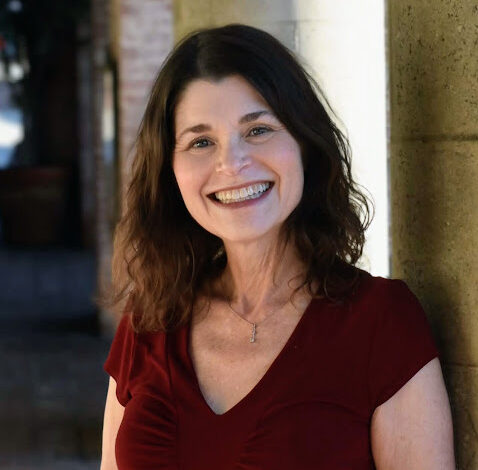
Dr. Michelle Finkel

Dr. Finkel is a graduate of Stanford University and Harvard Medical School. On completing her residency at Harvard, she was asked to stay on as faculty at Harvard Medical School and spent five years teaching at the world-renowned Massachusetts General Hospital. She was appointed to the Assistant Residency Director position for the Harvard Affiliated Emergency Medicine Residency where she reviewed countless applications, personal statements and resumes. Read more

Receive FREE Insider Medical Admissions Tips.

Listen to Dr. Finkel’s interview on the White Coat Investor podcast:

Listen to Dr. Finkel’s interview on the FeminEm podcast: