Blog Archives

The Fauci Effect

As I write this, I am listening in the background to an interview of Dr. Anthony Fauci by Dr. Sanjay Gupta through the Harvard School of Public Health. Dr. Fauci’s leadership (along with that of other physicians and epidemiologists) has apparently prompted what news outlets are calling the Fauci Effect, an 18% increase in the number of applications to medical school this year. I find this encouraging. After all, one could envision people running for the hills with the physical threat that COVID has posed for physicians (and other critical medical staff and front line workers). See the interview (oriented for a medical and public health community) with Dr. Fauci here

Tags: , , ,

The New York Times Ethicist

I field questions from clients about how to identify themselves racially and ethnically on their applications, and as diversity becomes a more prominent priority for many academic institutions, this issue will come up more often. The New York Times Ethicist answers an interesting moral dilemma posed by a medical school applicant in a recent column. Enjoy. 

Tags: , , ,

Medical School Interviews: Preparing for your MMI

All bets are off this year when it comes to interviews, although I do think that virtual interviews will be more conventional and equitable than in past years. While the majority of medical school interviews are traditional, an increasing number of institutions (including dental schools) are using the MMI platform. The MMI (multiple mini interview) is a format that uses several timed stations to assess applicants’ interpersonal skills and judgment.

A few things to note about MMI interview questions:

1) They are not always medically-related. You may be asked to manage an everyday problem (e.g. a disagreement at the supermarket).

2) They are not always situational. You need to be prepared for conventional questions too (e.g. what are your three greatest strengths?).

3) Schools are trying to assess whether you can skillfully employ important techniques and demonstrate professionalism. Underlying topics might include your ability to offer effective counseling, your understanding of patient-doctor confidentiality, your ability to diffuse a heated situation, or your capacity to admit wrongdoing, etc.

4) Make sure you know what structure the school is using and employ the right mindset: Working with an actor is different from executing a group project, which is, in turn, different from answering questions about your opinions. This year, because everything is virtual, I’m noticing that many schools are focusing on the latter type of problems for logistical reasons. 

5) Practice MMI questions before you “go” to your interview. Even if you have excellent social skills, there are techniques you should hone to expertly manage the challenging MMI format. 

Tags: , , ,

Is Step 1 Still on Track to Go Pass/Fail?

Earlier this year, United States Medical Licensing Exam (USMLE) administrators announced that, after a long process of consideration, Step 1 would be scored as pass/fail going forward. With the global pandemic and many systems in disarray, some students had been concerned that the plans might be delayed, but according to the USMLE, the transition to Step 1 pass/fail score reporting is on track to be implemented in January 2022. The USMLE is also considering some changes to Step 2CS, although the details of those modifications are not yet available to the general public. 

Check out this piece about the details of the Step 1 scoring change.

Tags: , , ,

Love Letters

Letters of interest (LOI) – or what some applicants jokingly call “love letters” – can be used in several types of situations:

1) Residency applicants who want to make an impression post-interview before program directors (PD) submit their rank lists
2) Medical school applicants who have been interviewed but have not yet been accepted or rejected
3) Medical school and residency applicants who have not yet been invited to interview
4) Medical school applicants who have been wait listed  

When writing your letters of interest, you should have the following goals:

1) Restating your strong interest in the institution
2) Positioning yourself as a distinctive candidate who can contribute fully to the institution

The biggest errors I see in LOIs are:
1) Too much content about a specific institution’s advantages. There is no reason to spend a paragraph or more telling a PD or medical school admissions member what makes their institutions special. Using your precious space this way is an opportunity cost, keeping you from fully showcasing what makes you a compelling applicant.
2) Writing about how the program or school will help you. The focus should be on how you will be a contributor to their institution. (It’s the “What have you done for me lately?” principle.)

Finally, let me say that I am coming to think that the term “letter of interest” might be better than “letter of intent” because, generally, I don’t recommend you let institutions know what your intent is since it might change. Note that you can create one general letter that you modify and send to different institutions with different goals (i.e. requesting an interview or demonstrating your interest post-interview). You can also modify the letter and send it to your top choices because, if you are not making commitments, then you can honestly use it for multiple institutions. 

For those of you interested in LOI assistance for medical school or residency applicants, please contact me.

Tags: , , ,

About Dr. Michelle Finkel

Dr. Michelle Finkel

Dr. Finkel is a graduate of Stanford University and Harvard Medical School. On completing her residency at Harvard, she was asked to stay on as faculty at Harvard Medical School and spent five years teaching at the world-renowned Massachusetts General Hospital. She was appointed to the Assistant Residency Director position for the Harvard Affiliated Emergency Medicine Residency where she reviewed countless applications, personal statements and resumes. Read more

Receive FREE Insider Medical Admissions Tips.

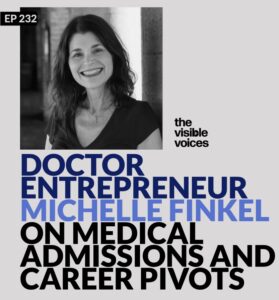
Listen to Dr. Finkel’s interview on The Visible Voices podcast: 


Listen to Dr. Finkel’s interview on the White Coat Investor podcast:

Listen to Dr. Finkel’s interview on the FeminEm podcast: