Blog Archives

Brevity is the Soul of Wit

As William Shakespeare so wisely pointed out, being concise is critical for good writing.

I’ve been editing a lot of personal statements over the last few months, and I deliberately recommend a word count of 750 or fewer for my advisees for a couple of reasons:

First, I’ve found that that number is just the right balance of content and streamlining: Over 750 words for an admissions essay lends itself to meandering writing.

Second, your reader is likely reviewing tens or even scores of applications in a short period of time. S/he is looking to spend as little time as possible on your written materials, while still getting a good flavor for your candidacy. Don’t burden your reader with verbiage.

Having trouble being brief? Here’s a helpful trick: Imagine AMCAS, AACOMAS, or ERAS is charging you $10 per word. How would you keep costs down?

Tags: , , ,

Choosing the Right Category for your AMCAS Experiences

AMCAS provides 18 categories in which you can classify your experiences. They are

Artistic Endeavors
Community Service/Volunteer – Not Medical/Clinical
Community Service/Volunteer – Medical/Clinical
Conferences Attended
Extracurricular Activities
Hobbies
Honors/Awards/Recognitions
Intercollegiate Athletics
Leadership – Not listed elsewhere
Military Service
Other
Paid Employment – Medical/Clinical
Paid Employment – Not Medical/Clinical
Physician Shadowing/Clinical Observation
Presentations/Posters
Publications
Research/Lab
Teaching/Tutoring/Teaching Assistant  

Sometimes an activity can match two categories. When that happens, lean on the clinical categories, if applicable. (For example, if your activity is both Leadership and Community Service – Medical/ Clinical, chose the latter.) If clinical is not relevant, then choose the category in which you have the fewest activities. 

A client who came to me as a re-applicant told me that a school from which she was rejected indicated that they had not counted a clearly clinical activity as clinical because she had classified it differently. Be sure you consider the categories deliberately in crafting your AMCAS.  

Tags: , , ,

Strategic Tips for the AMCAS Most Meaningful Paragraphs

Back in 2012, seemingly out of blue, a significant, new addition appeared on the AMCAS®. Applicants were being asked to identify their most significant extracurricular experiences (up to three) and support their choices with more writing. The instructions stated:

This is your opportunity to summarize why you have selected this experience as one of your most meaningful. In your remarks, you might consider the transformative nature of the experience, the impact you made while engaging in the experience and the personal growth you experienced as a result of your participation. 1325 max characters.

Now the Most Meaningful Paragraphs are par for the course, but applicants routinely make a few avoidable errors in crafting them. Here are tips to craft your best work:

1) Don’t merge the descriptors with the Most Meaningful Paragraphs because they are separate sections: You can complete descriptors for up to 15 activities with up to 700 characters each, plus up to three Most Meaningful Paragraphs of up to 1325 characters each. The fact that these are two different tasks might seem clear to some, but every year, I get AMCAS drafts to edit that include this error.

2) Do not use patient anecdotes in your Most Meaningful Paragraphs: Most medical school applicants have patient vignettes to share, which means that a patient story does not distinguish an applicant from the masses of other candidates. Also, these patient stories can sound trite or even condescending.

3) Don’t repeat what you have written in your descriptor. The Most Meaningful Paragraphs are an opportunity to delve deeper into your achievement. Let’s say you are showcasing your experience as a biochemistry teaching assistant. In the Most Meaningful Paragraph, give concrete examples of what you taught, to whom, how often, using what techniques. If you were promoted to head TA or asked to come back the next semester, showcase teaching achievements that propelled you to get the position. Did you get excellent teaching reviews from students? Did you offer an unconventional way of learning the difficult material? If so, what was it? By delving deeper, you can truly demonstrate the “transformative nature of the experience, the impact you made while engaging in the experience and the personal growth you experienced as a result of your participation.” Make sure to pick at least one of those three topics and answer it in the Most Meaningful Paragraphs. 

Bottom line: The Most Meaningful Paragraphs are an opportunity for you to demonstrate your distinctiveness and worthiness for medical school. Don’t waste this chance to further your candidacy.

Tags: , , ,

An Offer you Can’t Refuse: Writing Your Own Letter of Recommendation

In the last few weeks, several medical school applicants have contacted me saying that potential letter of recommendation writers are asking the candidates to write their own letters.

If you have this opportunity for medical school, dental school, residency, or fellowship, first, realize that it is not unethical to write your own letter if you’re asked to do so. If you’d like to explore the scruples of this issue, take a look at this New York Times Ethicist column about the topic.

The mistake I see candidates make in this situation is that applicants don’t write strong enough letters for themselves because they feel awkward about showcasing their accomplishments fully. If you have the opportunity to write your own letter, craft a glowing one. Be effusive and full-throated in your remarks about yourself. Remember that the letter-writer can choose to tone down the recommendation if s/he doesn’t agree. But if s/he does, you’ve utilized an opportunity fully and bolstered your candidacy tremendously.

Tags: , , ,

AAMC is Encouraging Both a Systemic Virtual Medical School Interview and Virtual Residency Interview Policy During the COVID Pandemic

There is no time like the present to plan how you’ll practice for your virtual medical school interview: Last week the Association of American Medical Colleges (AAMC) announced that they are strongly encouraging medical schools and teaching hospital faculty (that’s you, residency programs) to conduct all interviews with applicants in a virtual setting. In an additional, reinforcing announcement on away rotations (see below), the AAMC specifically addressed the residency cycle for this coming year saying that they recommend that all residency programs commit to online interviews and virtual visits for all applicants for the entire cycle. The AAMC suggests “that the medical education community commit to creating a robust digital environment and set of tools that will yield the best experiences for programs and applicants.” I applaud the AAMC for their willingness to be proactive, encourage public health, and decrease medical school and residency applicant anxiety. 

Assuming there are no in-person interviews, this medical school and residency application cycle will look completely different with no applicant visits to institutions or face to face conversations with current students/residents and faculty. Schools and residency programs will be left with quite a burden to make their institutions looks distinctive and to select qualified applicants.

For the latter, be prepared to strategically handle a virtual medical school interview. Consider getting my help. For the virtual residency interview, get my help here

On the same date that AAMC announced the recommendation regarding the virtual medical school interview, they also announced that for the 2020-21 academic year, because of COVID, away rotations should be discouraged and that ERAS’ opening be delayed. The latter has already come to fruition: While ERAS will open on September 1 for candidates to submit their applications, residency programs will not being reviewing applications and MSPEs will not be released to residency programs until October 21 this year (compared to September 15 and October 1 last cycle). Of note, ERAS did not announce a change in Match Day yet. 

There are a lot of changes afoot. To keep up, check this web page, which AAMC has been updating regularly. 

Tags: , , ,

About Dr. Michelle Finkel

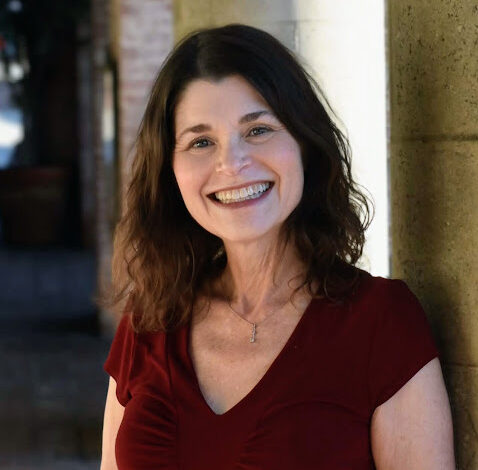
Dr. Michelle Finkel

Dr. Finkel is a graduate of Stanford University and Harvard Medical School. On completing her residency at Harvard, she was asked to stay on as faculty at Harvard Medical School and spent five years teaching at the world-renowned Massachusetts General Hospital. She was appointed to the Assistant Residency Director position for the Harvard Affiliated Emergency Medicine Residency where she reviewed countless applications, personal statements and resumes. Read more

Receive FREE Insider Medical Admissions Tips.

Listen to Dr. Finkel’s interview on the White Coat Investor podcast:

Listen to Dr. Finkel’s interview on the FeminEm podcast: