Blog Archives

New Year’s Resolution: Ten Ways for Pre-Meds to Improve their Medical School Applications

It’s the beginning of the year and, therefore, a great time for pre-meds to redouble their efforts toward their medical school goals. This year applications to medical school increased 18%, so the process has gotten even more competitive.

As always, I recommend a very focused approach that allows you to do more of what you want and less of what you don’t. Think research will help your candidacy but don’t like being in the lab? Consider public health or clinical investigations. Think volunteerism will bolster your application but don’t like being one of a crowd in a group project? Start your own social justice initiative.

There are definitely necessary elements to any robust medical school candidacy (clinical experience, strong grades), but being a pre-med can also be fun, mind-broadening, and career-affirming.

Here are ten ways to improve your medical school application that will give you direction but also leeway to be a happy applicant – not just a strong one.

Tags: , , ,

The Fauci Effect

As I write this, I am listening in the background to an interview of Dr. Anthony Fauci by Dr. Sanjay Gupta through the Harvard School of Public Health. Dr. Fauci’s leadership (along with that of other physicians and epidemiologists) has apparently prompted what news outlets are calling the Fauci Effect, an 18% increase in the number of applications to medical school this year. I find this encouraging. After all, one could envision people running for the hills with the physical threat that COVID has posed for physicians (and other critical medical staff and front line workers). See the interview (oriented for a medical and public health community) with Dr. Fauci here

Tags: , , ,

How to VITAlize your VITA interviews

At the end of the spring, with the weightiness of COVID clearer, the AAMC (much to their credit) strongly recommended that medical schools and residencies conduct virtual interviews during the upcoming admissions season. Upending years of in-person sessions, the announcement has made a huge impact on this season’s admissions process. Virtual interviews will likely diminish some of the bias that plagued the system previously and will save everyone a bundle of money

The AAMC did not urge the use of any particular platform, but it does provide its own, called the Video Interview Tool for Admissions (VITA), for interested medical schools. The AAMC describes VITA as a one-time, one-way recorded video interview to help medical schools assess applicants’ pre-professional competencies that are important for success in medical school. 

The AAMC indicates that VITA questions will target the below capabilities:

  • Social Skills
  • Cultural Competence
  • Teamwork
  • Reliability and Dependability
  • Resilience and Adaptability

An applicant’s VITA session will include six questions presented in text form (no interviewer), and applicants record a video response after having one minute to read and reflect on each question. Candidates then have up to three minutes to record a response. If an applicant needs a break between questions, that’s not a problem: All six questions can be completed in one sitting, or candidates can choose to have breaks of any desired length between questions. (Of course, the interview must be submitted by a medical school’s deadline.)

According to the AAMC, questions can be related to personal experience (e.g. “Why did you choose medicine?”), past behavior (“Describe a time…”), or hypothetical situations (“Imagine you are… What would you do to resolve this issue?”). 

These types of questions can be tricky without practice, but are bread-and-butter for someone who is prepared. 

Remember the time you spent a week studying for the MCAT? No, you don’t ;). That’s because one week is not enough time to study for the MCAT! Along those lines, it’s important to start early, preparing yourself fully for VITA and other virtual interview platforms. Much of interviewing is confidence, which can be developed. Please hire me now for help. 

Tags: , , ,

The Virtual Medical School Interview: What to Expect when You’re Expecting… An Unconventional Format

In the late spring, to its credit, the Association of American Medical Colleges® (AAMC) recommended that all medical school, residency, and fellowship interviews be done virtually this cycle. Formats may vary, but interviews should not be in-person.

One configuration that seems to be emerging for medical schools (at least) is a two-part model: asynchronous and synchronous. The former involves a recorded session in which a computer platform – without a live interviewer present – provides questions to applicants who then have a set time to record their answers. The synchronous session is a live, remote interview.

The advantage of virtual interviews – beyond obvious health benefits and cost containment – is a standardization of the process, but mastering the new, remote processes may be difficult and anxiety-producing. 

To get help with this new world of virtual interviews, contact me

Tags: , , ,

“Why Our School” Secondary Essay: How to Get Started

Secondary essay prompts vary, but there are a few that are standard fare. See my recent blog entry for guidance on the familiar “diversity essay.” “Why do you want to attend our school?” is also a common topic pre-meds will encounter.

Medical school admissions officers want to be assured that you know their institution, are seriously considering it, and will fit in well there. In approaching the “why-our-school” question, do your research on the institution and link something specific about you with the school’s philosophy, curriculum, patient population, and/or extracurricular programs.

For instance, if you were a teaching assistant for chemistry in college, you might link your use of the Socratic method with a school’s tutorial-based learning. In that way, you demonstrate knowledge of the school, show that you connect well with it, and showcase your accomplishment.  

The paradox here is that – although you are theoretically focusing your essay on one school – because so many institutions have overlapping philosophies, curricula, and objectives – you can oftentimes use the same essay framework for many different schools. 

That’s one strategic way to cut down the overwhelming workload that secondary applications present. 

Tags: , , ,

About Dr. Michelle Finkel

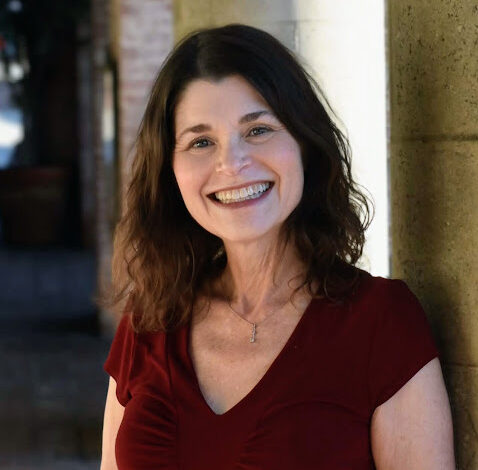
Dr. Michelle Finkel

Dr. Finkel is a graduate of Stanford University and Harvard Medical School. On completing her residency at Harvard, she was asked to stay on as faculty at Harvard Medical School and spent five years teaching at the world-renowned Massachusetts General Hospital. She was appointed to the Assistant Residency Director position for the Harvard Affiliated Emergency Medicine Residency where she reviewed countless applications, personal statements and resumes. Read more

Receive FREE Insider Medical Admissions Tips.

Listen to Dr. Finkel’s interview on The Visible Voices podcast: 


Listen to Dr. Finkel’s interview on the White Coat Investor podcast:

Listen to Dr. Finkel’s interview on the FeminEm podcast: