
Blog Archives

Positively Influence your Letters of Recommendation by Making the Job of Letter Writing Easy

When pre-meds, residents, nurses, and physician colleagues asked me to write them LORs when I was Assistant Residency Director, the first thing I requested was that they send me background information to make my letter robust…and my job easier. Accordingly, whether you are applying to medical school, dental school, residency, or fellowship, I strongly recommend you create a “LOR packet,” which can include the following:

1. A brief, well-written cover letter defining all of your important accomplishments
2. Your curriculum vitae (CV)
3. Your personal statement in its final form
4. Your transcripts.

With regard to the cover letter, keep it streamlined. No one will skip the beach or her two-year-old’s birthday party to read your exhaustive biography :), so you want to thank the writer and highlight your pre-professional achievements on one page. The point of the cover letter is to supplement a writer’s knowledge of your candidacy and offer flattering content for inclusion. A college professor may know that you made the only A in an organic chemistry class, but her LOR for medical school will be more complete, and she will demonstrate a more intimate familiarity with you if she knows enough to write that you volunteer regularly at a homeless shelter.

With regard to the CV and personal statement, these make useful supplements to the LOR packet only if they are in professional and final form. Don’t include rough drafts, as poorly organized background information leaves your writer the impression that you are a disorganized person. Also, only include the transcript if it bolsters your candidacy, demonstrating academic achievement. Don’t shoot yourself in the foot if you have some bad grades you’d rather not showcase.

Bottom line: An applicant who offered me a list of her accomplishments in a tidy, accessible package was more likely to get a strong, comprehensive letter that was submitted promptly. She also distinguished herself from the majority of candidates who requested letters without demonstrating a comparably sophisticated understanding of the demands this process made on my time. If you can make a letter writer’s job easier, your forethought is likely to pay dividends in the letter you receive. The savvy applicant can take subtle advantage of her ability to “lead the witness.”
Tags: , , ,

The Single Most Important Thing Applicants Should Focus on in a Medical School Application

Varsity Tutors interviewed me a decade ago regarding mistakes to avoid in a medical school application, best undergraduate majors for pre-meds, how to approach MCAT prep, and the most important factor a medical school applicant should focus on in her candidacy. My answers still hold true today and might improve your angle on the process. Take a look at this short interview. (Note that there are some typos in the piece that are not mine ;)).

AMCAS opens in three and a half weeks!

Tags: , , ,

Time to Take A Break

It’s a stressful time of year for those applying to medical school; I’d recommend taking a reading break between your application obligations. 

Here’s a piece I wrote for Student Doctor Network regarding great books for doctors in training. (Additionally, I’d include When Breath Becomes Air as a must read.)

Also, I just finished a (non medical) novel called The Lincoln Highway that was truly magnificent. 

Enjoy!

Tags: , , ,

NRMP Match

Congrats to all those who successfully matched the week before last! The NRMP just published statistics from this year’s Main Match:

Of interest, there were 42,549 applicants who submitted certified rank order lists in this year’s Main Match, and 34,075 of those matched to PGY-1 positions (80.1%). This was a 1.6% increase over last year.

The NRMP also reports that out of 39,205 total positions offered, 36,943 filled (94.2%), and of 36,277 first-year positions offered, 34,075 (93.9%) filled. These rates were similar to last year’s. Of 6,087 total certified programs, 5,367 filled (88.2%), which was a decrease from last year, per the NRMP.

For more numbers, take a look at this NRMP press release.  

Tags: , , ,

Studies Show that Physicians are More Likely to Use Negative Terms in Black Patients’ Medical Charts

Here’s a disturbing and important New York Times article detailing two studies showing that physicians were more likely to use negative language in the medical record about Black patients than about those of other races. 

Medical notes from emergency departments and inpatient settings were more likely to use this pejorative language, possibly because of a lack of long-standing relationships with patients.

Along these lines, a term like “refused” should not be used in the medical record. If we, as medical professionals, believe the patient is truly in charge of his/her body, “declined” is an appropriate replacement. 

Tags: , , ,

About Dr. Michelle Finkel

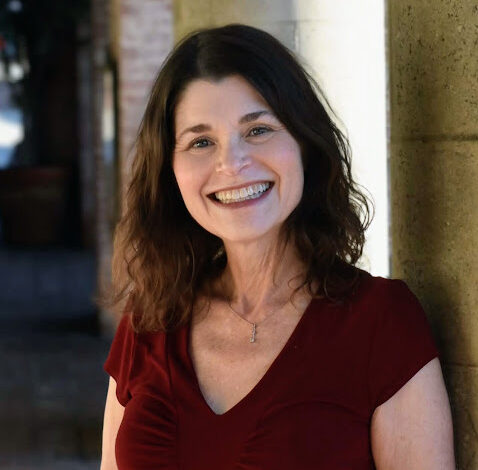
Dr. Michelle Finkel

Dr. Finkel is a graduate of Stanford University and Harvard Medical School. On completing her residency at Harvard, she was asked to stay on as faculty at Harvard Medical School and spent five years teaching at the world-renowned Massachusetts General Hospital. She was appointed to the Assistant Residency Director position for the Harvard Affiliated Emergency Medicine Residency where she reviewed countless applications, personal statements and resumes. Read more

Receive FREE Insider Medical Admissions Tips.

Listen to Dr. Finkel’s interview on The Visible Voices podcast: 


Listen to Dr. Finkel’s interview on the White Coat Investor podcast:

Listen to Dr. Finkel’s interview on the FeminEm podcast: